
Archive for month: May, 2015
Last blog!! =)
Wow, I cannot believe that this is already our last blog!
Anyhow, since I had such an interesting patient two weeks ago and since this blog has to relate to critical care I have decided to talk about his vent settings. I don’t know about anyone else, but I truly enjoyed learning about vents; which is also why I have decided to talk about vents: using the PSV mode to be specific. The pressure support ventilation (PSV) mode is a pressure mode that is commonly used for weaning off the ventilator. When a patient is placed on this vent mode, the patient has the ability to initiate their own breath. When the patient initiates a breath then the vent kicks in and assists them to the point where they achieve the desired pressure level. Not only does the vent help the patient reach a desired pressure level, but it also makes sure that the patient maintains the pressure level throughout the inspiratory phase of breathing. A advantage of this mode is that it decreases the work of breathing in the patient. on the other hand, a disadvantage is that the patient must have an intact respiratory drive.
Morton, P. G., & Fontaine, D.K., (2013). Essentials of critical care nursing: a holistic approach. Philadelphia, PA: Lippincott Williams & Wilkins.
One Final Blog
It is officially one more week until out pinning ceremony. It all seems quite surreal. However, looking back at this course and all we have learned this semester in addition to all of our previous semesters, I feel that I am ready. This course has helped me to bring everything together. In patho we learned patho. In pharm we learned medications. However, in critical care I feel that I learned how all of these previous courses work as one to help us become competent nurses. Through this course I learned how to look at everything on a whole (labs, ABGs, test results, assessments) to see how it makes these patients with their specific diagnoses. I am excited to put the knowledge I have learned in this course and all of our others to work in the filed of nursing.
What?! I need a portfolio?
So you are close to graduating. You are getting ready for interviews and NCLEX studying. You are planning family time to celebrate pinning and graduation ceremonies. Then you are asked if you are bringing your portfolio to your interview?!
What portfolio? What should I include? What’s too much?

Where do you start? Here’s some tips:
Have a clean, edited CV
X
Y
Z
Hello world!
Welcome to WordPress. This is your first post. Edit or delete it, then start blogging!
Closing in on the end of the semester!
Over the last two weeks, our team completed the ROV education and mentoring module of the NOAA sponsored “Crossing the Channel” outreach program. It is embedded in the respective Marine Science Academies at Channel Islands High and Frank Middle Schools. The students successfully designed and piloted eight different PVC ROVs! 


For the final module, both the high and middle school students took a two day trip to our Santa Rosa Island Research Station! Last Friday our team went to pick up the students from the island aboard the NOAA research vessel, the Shearwater.
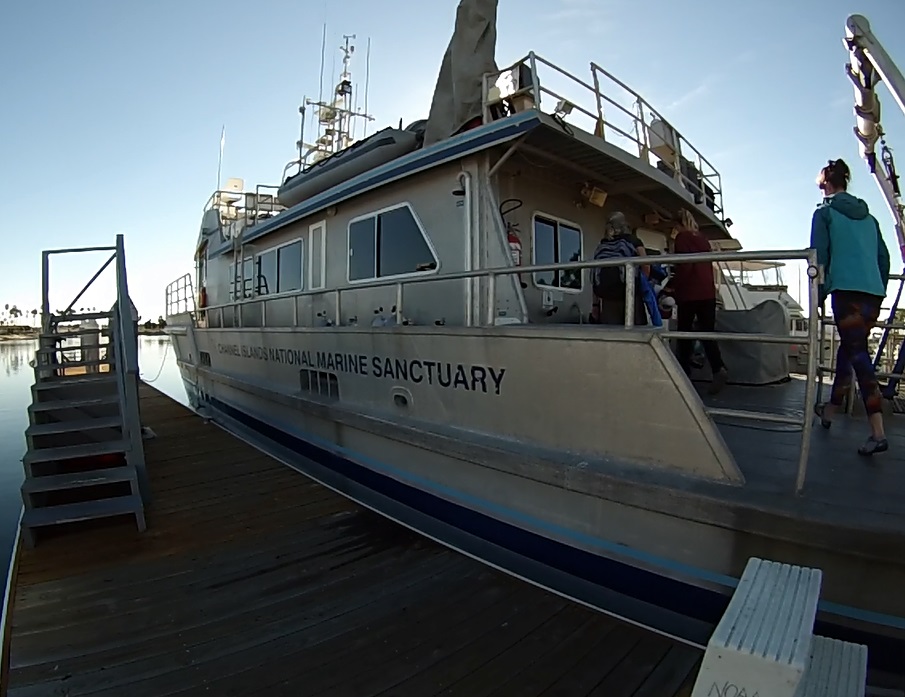


Once the students were aboard, our team worked with the crew of the Shearwater with the goal of collecting preliminary research on fish behavior using our OpenROVs. Unfortunately the weather did not co-operate, we had to anchor just off shore of the island, instead of in the Santa Barbara channel, which we had planned. Despite the wind, we were able to launch two of our units. We demonstrated how we use the ROVs in research, and then allowed the K-12 students to get some hands on experience piloting!

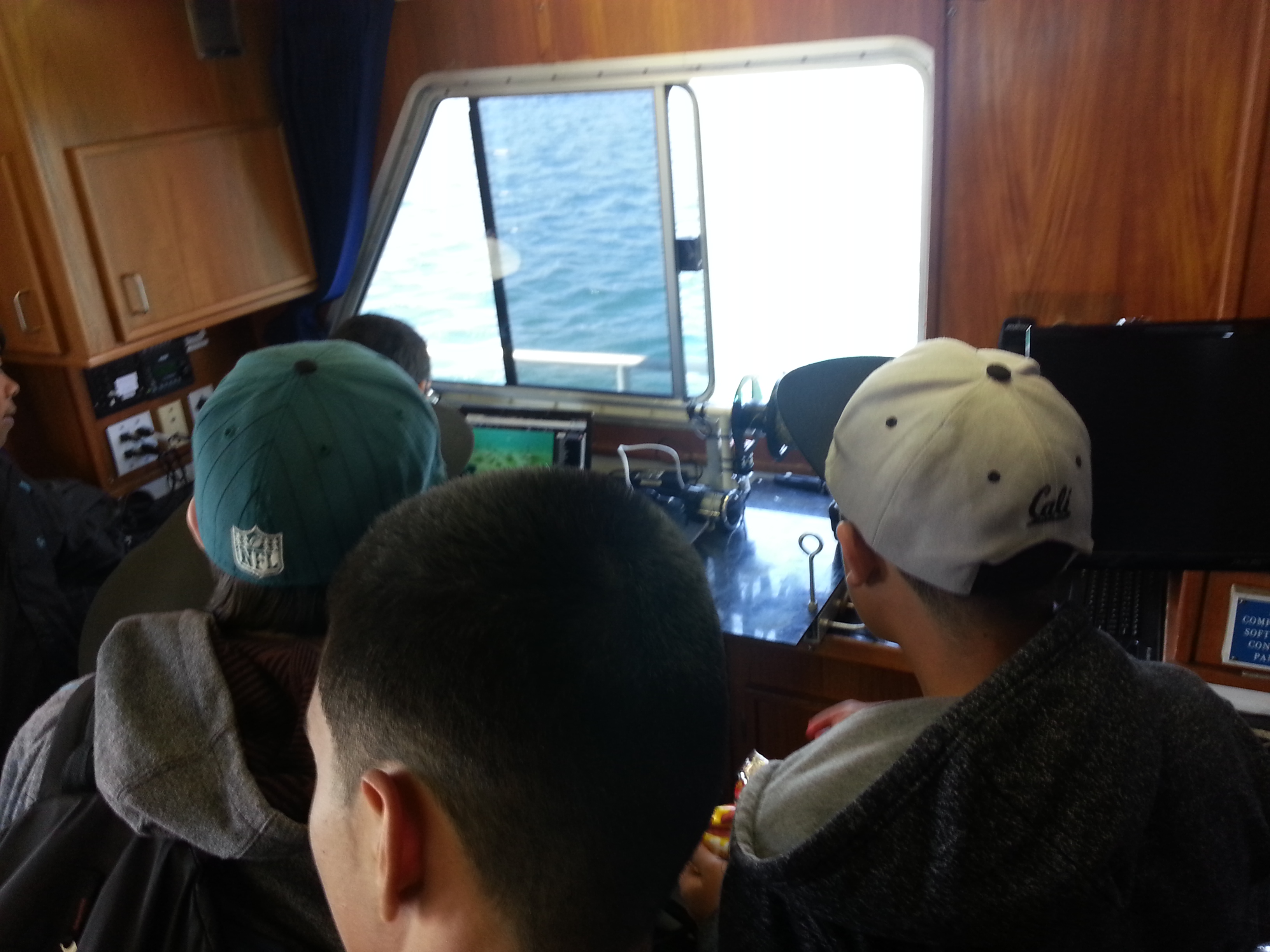
After about an hour, the surge and wind started picking up. In order to find fish, we were diving the ROVs near kelp beds, but the conditions and diminishing visibility resulted in kelp entanglement! We attempted to recover the ROV by navigating through, but in the end, we had to send down a diver to retrieve it. The ROV made it out unscathed; luckily we had a very experienced diver. The trip was a great experience for the middle, high and undergraduate students alike!
The semester is quickly coming to a close, there are roughly two weeks left, and the team still has a lot of work to do! The senior members of our team are preparing to present their projects and findings at the SAGE Student Research Symposium. In addition, they are working furiously to complete their final capstone project papers.
In exciting news, we have begun to collaborate with Dr. Mike Allen and his master’s student Guy Trimby, a team from Plymouth Marine Laboratory, which is located in the United Kingdom. They are working on methods of specific biological molecule detection near coral reefs, using ROVs. We hope to aid them with their OpenROV modification and development, and in the future, with data collection. We are also preparing for our upcoming trip to the Cook Islands this summer, where we will be characterizing some of the reefs surrounding the islands!
