Da Quake

Image: KQED

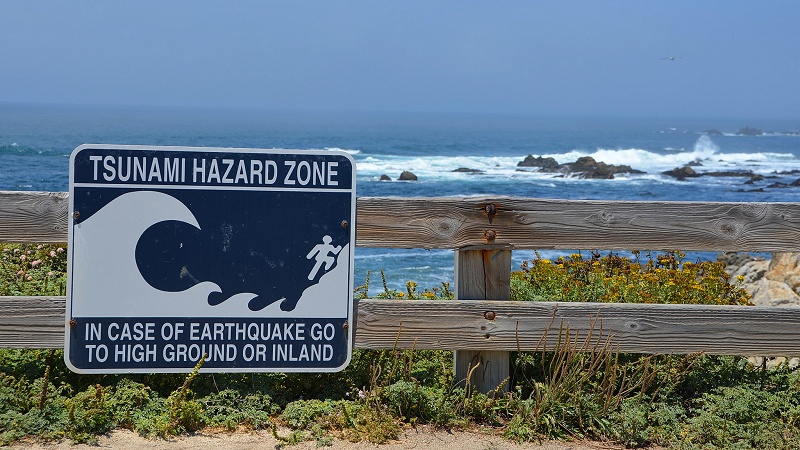
This morning’s magnitude 6.5 earthquake in the waters offshore of Eureka in northern California (technically 160 km west of Ferndale, California) and raft of emails we are getting in the wake of this news provide a convenient opportunity to reiterate that responsibly and effectively dealing with the threat of coastal flooding associated with sea level rise has many additional benefits, perhaps chief among them in the context of today’s discussion is improved protection from seaquake-induced tsunami flooding.

Just this week I lectured about the threat climate change poses to our coastal zone. While there are many threats to be sure, the threat that the general public can most readily identify, is the easiest to intuitively grasp, and is the simplest to quantitatively estimate is sea level rise (often abbreviated as simply SLR).

California’s Approach to Earthquakes

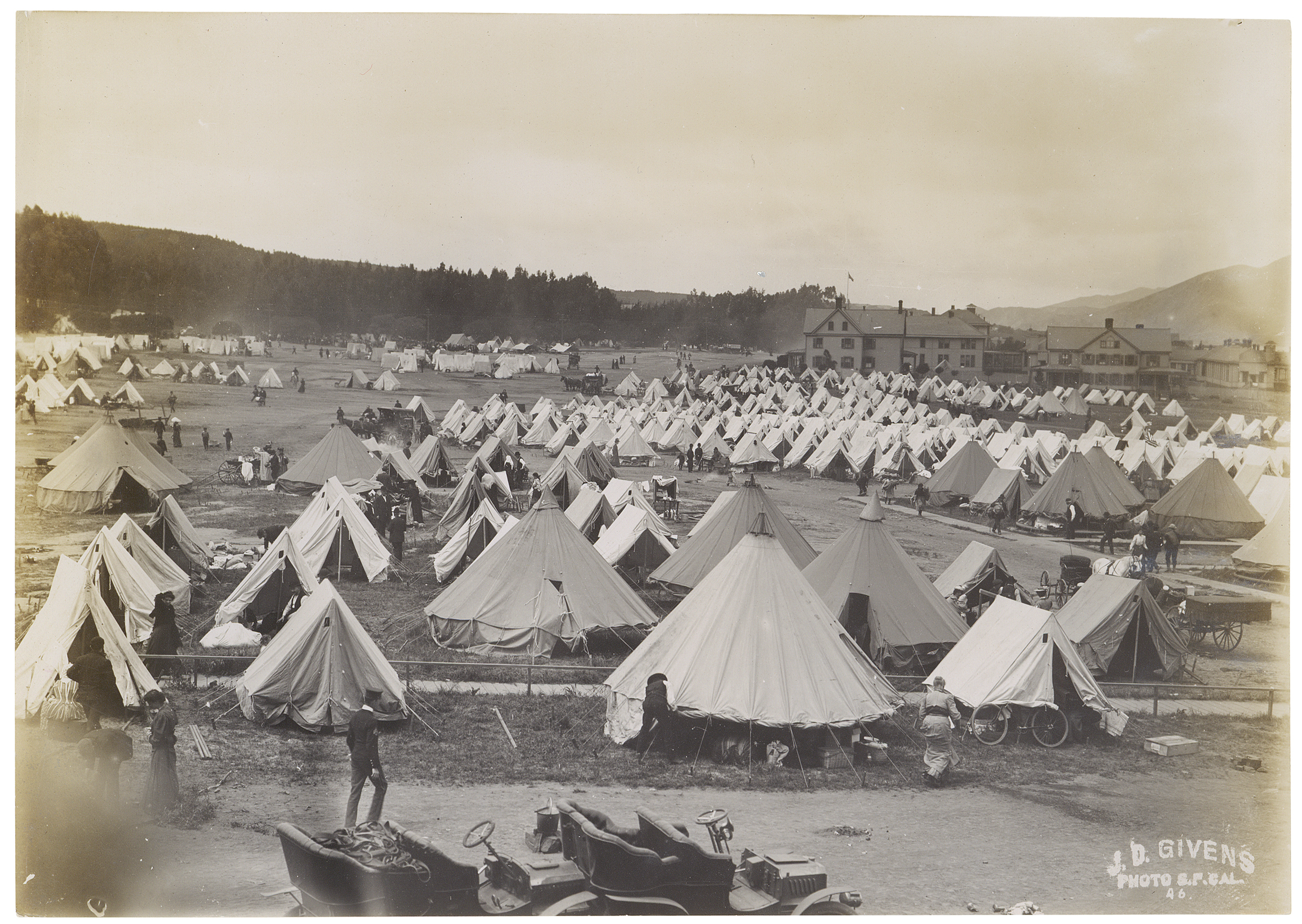
Earthquakes are a part of life for those of us here in California and across the Pacific Rim’s so-called Ring of Fire. Our initial (modern) response to quakes really got going in the wake of the devastating 1906 earthquake that rocked the San Francisco Bay Area. That tumbler destroyed much of San Francisco, turned a good chunk of Golden Gate Park into a homeless encampment for more than a year, and generally reset the table on a whole host of physical and social systems. Out of that came improved policies on disaster response, municipal water systems (if we consider almost destroying Yosemite Valley and actually destroying Hetch Hetchy Valley an “improvement”…but I digress), and (eventually, after several more quakes) building codes. Much of our planning for earthquakes over the ensuing decades emphasized requiring buildings to be constructed such that occupants would survive and be able to exit the building before the quake-induced collapse of the structure. More recently (since the early 1990s) we have shifted our emphasis to begin to require new building designs that make our structures not only survivable for people but survivable for the infrastructure/society as well. The idea here is that a resilient house is vastly more desirous than a house that will need to be condemned in a quake’s wake, costing the homeowner hundreds of thousands of dollars (or more) and years of dislocation.

Homeless encampment in San Francisco’s Presidio four days-post quake/fire. Image No. 44. Entitled “More military help – 4th day.” Image: Record Group 46, Records of the United States Senate, National Archives.

We need to take a similar approach to thinking about our coastal zone. Evolving our coastal zone such that higher and higher water does not necessitate idiotic and ultimately futile ocean walls/barriers that destroy our coastal ecosystems, culture, businesses, and society is what we need now.

This is the kind of lame management decision that we want to avoid. Hardened seawalls don’t typically solve a thing. They simply make the problem worse. Image: climatetechwiki.org

Sea Level Rise in California

Over the past century, sea level has risen nearly 20 cm (8 inches) along the California coast. The Intergovernmental Panel on Climate Change (IPCC) and various general circulation model scenarios strongly suggest quite significant increases in sea level elevation off across the state’s coastline due to climate change over the coming century.

Coastal Flooding Risks

Something in the neighborhood of 40% of the residents in the continental United States reside near our coastlines. These areas in turn are home to both most of our nation’s economic activity and our greatest population growth rates. Add in the low elevations of our coastal fringes in this era of rising seas and we get increasing long-term exposure risk for to flooding. Hauer and Evans (2015) estimate that we are talking about something like 1.3 million, 3.4 million, and 11.7 million people in the continental United States at risk of inundation-related displacement under scenarios of 0.3 m, 0.9 m, and 1.8 m sea level rise by 2100. Hauer and Evans note that:

The magnitude of populations displaced from sea level rise could mirror the Great Migration of southern African-Americans during the 20th century and radically alter the future distribution of the US population. It could cost up to $US11.7 trillion to relocate these displaced populations, based on costs associated with managed retreats [from the IPCC].

San Francisco International Airport in 1946 as it began its displacement of salt marsh around the edge of San Francisco Bay. Image: Aerial Archives

Setting the people part aside, our coastal infrastructure itself is amazingly vulnerable. We have loved putting our powerplants in coastal estuaries, our airports in bays, and our economic engines just a few centimeter or meters mean high tide. The best report on our vulnerablility in California to date has come from a 2009 study by the Pacific Institute which only used existing human populations (i.e. assumed no population growth). That reported noted:

We estimate that a 1.4 meter sea level rise will put 480,000 people at risk of a 100‐year flood event, given today’s population. Among those affected are large numbers of low‐income people and communities of color, which are especially vulnerable. Critical infrastructure, such as roads, hospitals, schools, emergency facilities, wastewater treatment plants, power plants, and more will also be at increased risk of inundation, as are vast areas of wetlands and other natural ecosystems. In addition, the cost of replacing property at risk of coastal flooding under this sea level rise scenario is estimated to be nearly $100 billion (in year 2000 dollars). A number of structural and non‐structural policies and actions could be implemented to reduce these risks. For example, we estimate that protecting some vulnerable areas from flooding by building seawalls and levees will cost at least $14 billion (in year 2000 dollars), with added maintenance costs of another $1.4 billion per year. Continued development in vulnerable areas will put additional areas at risk and raise protection costs.

Large sections of the Pacific coast are not vulnerable to flooding, but are highly susceptible to erosion. We estimate that a 1.4 meter sea‐level rise will accelerate erosion, resulting in a loss of 41 square miles (over 26,000 acres) of California’s coast by 2100. A total of 14,000 people currently live in the area at risk of future erosion. Additionally, significant transportation‐ related infrastructure and property are vulnerable to erosion. Statewide flood risk exceeds erosion risk, but in some counties and localities, coastal erosion poses a greater risk. This report also provides a comprehensive set of recommendations and strategies for adapting to sea‐level rise.

Southern California power plants vulnerable to a 100-year coastal flood with a 1.4 meter sea-level rise. Map: Pacific Institute.

See for yourself

A few years back we needed to rely on professors like me (or more accurately our undergraduate researchers who would do most of the work) to generate maps and graphics of inundation. No longer! We are blessed now with a host of various online viewers where anyone with a web browser can explore the potential flooding associated with sea level rise.

Some of these are simple “bathtub” models wherein we take the elevation of the land and draw polygons at a constant elevation to show the areas at risk. This is essentially looking at a topographic model of our coast. A great example of this would be NOAA’s Sea Level Rise Viewer:

A newer suite of sea level rise viewers tries to go beyond that simple “bathtub” approach, overlaying additional dynamics into the predictions. A great example of this category of predictors is The Nature Conservancy’s modeling effort here in Ventura County. For this viewer we added in the changing impact of long-term exposure to higher water levels, erosion, conversation of various vegetation communities and saltier water intrudes, etc. Check out TNC’s Coastal Resilience Viewer here:

All of these sea level rise visualizations are also are great “first pass” estimates of tsunami vulnerability as well.


In this era where much is being made about limited political collaboration and deep philosophical divisions between various camps in our divided nation, infrastructure investment seems to been one area of hope. Here is hoping that this quake off the coast of California can remind us that ecologically responsible coastal infrastructure improvements could pay dividends for decades to come.

Ready? Set? GOogle! Launchpads to Learning

In October, I shared ways to use Google Slides to support UDL and critical thinking.  Since then, Google Slides has become an essential instructional tool in my class sessions for disseminating content and facilitating student collaboration in physical and digital classrooms.   More than a presentation tool, Google Slides is a launchpad to learning, providing […]

About me

1527119_10152584555862762_5360048576998197288_n


I am currently a nursing student at California State University Channel Islands in the class of 2018! My goals are to graduate from nursing school, pass the NCLEX, and to find an area of nursing I’m passionate about along the way. What makes me stand out from others is the trait of perseverance that allows me to overcome adversity. I have completed my AA in Natural Sciences at Oxnard College and have completed my minors in Biology and Psychology at CSU Channel Islands. I have prior experience working as a CNA and am currently working as a sub-Health-Technician for the Pleasant Valley School District here in Camarillo.

SSRIC S4 2017 Conference Announcement

The Social Science Research and Instructional Council’s annual Social Science Student Symposium (S4) will take place on Thursday, April 27, 2017 at Fresno State.

The Council invites all undergraduates and graduate students, from all CSU campuses and California community colleges, in all areas of the social sciences, to present their research to their peers.

Thanks to the continuing generosity of Dr. Gene Geisler, Professor Emeritus of Political Science at San Francisco State and a key founding member of the SSRIC, the 2017 Symposium will include three $5,000 best paper awards. In addition to these awards, there will be a small amount to defray travel costs for participants. Eligibility for awards is limited to CSU undergraduates and Master’s level graduate students, and students in the first two full years of a CSU doctoral program.

Last year a CI student won the best paper award at this conference. 

Registration deadline is Wednesday, March 30, 2017.

For more information, please visit: http://ssric.org/participate/src . More information including the link to register will be available on the website soon.

If there are any questions, please contact Tim Kubal (tkubal@csufresno.edu) or Ed Nelson (ednelson@csufresno.edu).

Facebooktwittergoogle_plusredditpinterestlinkedinmailby feather

Clinical Experience

September – November, Fall 2014

NRS 201: Introduction to Professional Nursing/Fundamentals

St. Johns Regional Medical Center, Oxnard

Units: Rehabilitation Unit


January – April, Spring 2015

NRS 221: Nursing Care of the Adult With Acute & Chronic Illnesses I

Ventura County Medical Center, Ventura

Units: Medical-Surgical Unit, Operating Room, Telemetry Unit


May – June, Summer 2015

NRS 241: Psychiatric and Mental Health Nursing

Vista Del Mar Behavioral Healthcare Hospital, Ventura

Units: Adolescent Unit, Adult Unit


August – October, Fall 2015

NRS 222: Nursing Care of the Adult With Acute & Chronic Illnesses II

West Hills Hospital, Woodland Hills

Units: Medical-Surgical Unit


August – December, Fall 2016

NRS 222: Nursing Care of the Adult With Acute & Chronic Illnesses II

St. Johns Pleasant Valley Hospital, Camarillo

Units: Medical-Surgical Unit, Wound Care, Subacute Unit, Emergency Unit


Difficult Conversations: Connecting Across Difference

Simone Weil (1909-1943) was a French philosopher, social and political activist, mystic and teacher. In Waiting for God, she wrote: “The capacity to give one’s attention to a sufferer is a very rare and difficult thing; it is almost a miracle; it is a miracle. Nearly all those who think they have this capacity do not possess […]

Paws Up, Don’t Shoot

The response to the recent killing of 10 alpacas (Vicugna pacos) in one day and then a goat and an alpaca by one of our resident male mountain lions (Puma concolor) in the exurban wonderland that is the Santa Monica Mountains has prompted a massive public outcry. In the immediate wake of those predation events, the owner of the then-lifeless alpacas sought and quickly received a depredation permit which grants legal permission to kill a mountain lion that threatens people or livestock to hunt down. Securing a state approval for killing this mountain lion named P45 is essential as mountain lions are a special status (protected) species in the state of California, their routine hunting banned since 1967. A scheduled public hearing slated to be an overview of potential methods and technologies to minimize the probability of mountain lion-livestock interactions quickly evolved into a massive community event.

Image: NPS

Image: NPS

Predation Brought Attention

The alpaca kill. Image: KCAL9

The alpaca kill. Image: KCAL9

My family and I were out of town this Thanksgiving weekend. As we returned to southern California I caught wind of the multiple predation events over the weekend and the suspected involvement of one of the male lions that our National Park Service colleagues have routinely tracked with GPS colors for the past several years (the 45th one actually, hence the “P45” moniker). Needless to say I headed over to the just-announced public hearing this evening with an eye to record the discussion for my university lectures on managing coastal wildlife along the wildlands-urban interface and on general mountain lion management across California. I had no idea this event would turn out to be as massive as it was. I was, of course being an “absent minded professor.” I should clearly have realized the ancient equation of:

Santa Monicas + mountain lions = public/media firestorm

Image: Robert Kovacik via Twitter (@RobertNBCLA)

Image: Robert Kovacik via Twitter (@RobertNBCLA)


First Signs of Something Unusual

traffic-line-waiting-to-get-into-paramount-ranch-11-30-16

Entering Paramount Ranch for the public hearing.

The first sign of something beyond the usual was unfolding at this hearing was the tremendous backup I hit when still about a half mile away from the entrance to Paramount Ranch, the site of the hearing. Normally this stretch of Cornell Road in Agoura Hills is pretty car-free this time of night (the hearing was slated to begin at 7pm). But tonight it was bumper to bumper traffic on both sides of this two lane, country road.
As I pulled into the parking lot, I lost count of the cars after I got up past 200. Walking up to the barn where the hearing was taking place already 15 minutes late, I began passing folks walking BACK to their cars, clearly frustrated by the overflow capacity and the lack of ability to get inside and properly hear the speakers. After a few minutes some of the crowd turned a bit unruly and started asking for additional speakers outside or for the facilitators to turn up the volume of the existing sound system. The Park Service happily complied and cranked up the sound system just before Jeff Sikitch launched into his brief overview of mountain lion natural history and conservation in the Santa Monica Mountains. That volume and Jeff’s engaging presentation squelched the burbling unrest and brought the crowd (now at least 350 by my conservative count, with something like 150 of outside in the crisp, 45° F air on this cloudless Wednesday night and unable to squeeze into the jam-packed hearing room).

big-turnout-for-mountain-lion-p45-11-30-16

Overflow into the cold night as more and more folks continued to arrive.

A Lion-Friendly Crowd

p45-mountain-lion-hearing-11-30-16
The tone of meeting was cemented during Jeff’s presentations with several bouts of loud clapping and cheers whenever he would mention wildlife crossings, the natural behavior of the mountain lions, or the fact that these illusive animals rarely interact with humans and generally seek to avoid them at all costs. As the evening would progress and elected officials (e.g. Linda Parks, Ventura County Supervisor) or their proxies (e.g. Tim Pershing from Assemblyman Richard Bloom’s office) joined in the chorus for reasoned management and lion-centric responses to this and related crises the crowd got louder and louder. More emboldened with each speaker. From my vantage outside, the commentary was constant and clearly one-sided. This crowd was vociferously favoring mountain lion protection and decidedly unhappy about the possibility of one of our remaining terrestrial apex predator in the Santa Monicas being killed.

Additional Speakers

Public Comments

The crowd’s anger began to climax as Santa Monica Mountains National Recreation Area Superintendent David Szymanski closed the formal presentations and invited the public to chime in with their comments and questions. His imploring the audience to remain respectful and hear all sides on this issue got little traction. The second public speaker tossed out a spark into the psychological kerosene of the room and those that followed were generally content to fan those flames. Clearly many in attendance saw this event as something of a unique opportunity to advocate for wider protections for mountain lions and broader support for general conservation efforts across the region.

Contrarians

dsc02189

The most interesting parts of the public input came when the representative for the depredation permit-possessing owner of the dead alpacas and (a few minutes later) a local homeowner spoke in support of killing/removing P45. The crowd was having any of it.

hearing-after-2-hours
Breakthrough?

dsc02185
Between the jeers and strong reactions, a possible compromise was at first not well understood. It seemed to take the crowd a minute to realize that the permit holder had agreed to hold off with the hunting down of P45 for tonight, ultimately announcing a press conference on her land tomorrow morning. The Park Service and others offered additional help and support, either in design of predator-exclusion structures or funding for such technologies/materials. In short, there seemed to be broad agreement that no one was happy to kill a mountain lion and most content to work towards an equitable compromise that might allow P45 to remain in the Santa Moncias (we should note the landowner had previously lost livestock to mountain lion predation and had worked with local experts previously to try to minimize conflicts with the predators).

Solutions Already Exist

At the risk of sounding a bit pollyanna-isa, we do have existing solutions to keep mountain lions and livestock separated.  The best for containable livestock are these totally enclosed pens shown below.  For wider-roaming livestock the best answer seems to be Anatolian dogs (as someone who works in eastern Anatolia, I can attest to these hard core, shepherding canines).

encolsure-for-livestock-p45-11-30-16

Historical Overview of Mountain Lion Management in California

Questions

There were many questions and (judging by some of the comments and the way those questions were phased from both sides of the issue) a clear lack of understanding about some key aspects of mountain lion natural history. Many of these were addressed by Jeff’s presentation or in my regular mountain lion lecture (see above).

Note: I’ll be updating these over the next few hours when a have a bit more time.

Is it unusual for mountain lions to kill several animals at once?

No.

Are mountain lions a threat to people?

Very rarely if ever.  These are wild animals, but these guys strongly avoid people at almost every turn.

Is it bad to kill mountain lions?

Generally yes, but we do issue many depredation permits each year (see my above lecture on mountain lions).  Killing one is unfortunate, but not necessarily the end of the world.  The exception is in places like the Santa Monica Mountains where roads greatly restrict the ability of mountain lions (and a whole host of other critters) to disperse into or out of the Santa Monica Mountains.  Basically terrestrial critters need to run a gauntlet of death if they want to get in or out of these road-restricted coastal mountains.  See either of my presentations below (a short presentation on our long-term road kill study or one of my longer lectures on road kill):


Growing Media Attention

This story seems to be showing no signs of stopping.  A few examples are below:

http://www.latimes.com/local/lanow/la-me-ln-alpaca-mountain-lion-20161130-story.html


Note: I will update this blog post as new development arise.

Coding is Fun!

I’ve only recently rediscovered the magic and excitement of coding. My earliest programming experience involved writing Fortran computer programs using punch cards as part of my junior year pre-calculus course. I still remember feeling embarrassed when my teacher, Mr. Flickinger, handed me a giant stack of paper output resulting from my Fortran program having an error that caused it to never end. I feel envious of the many opportunities that kids have these days in being able to learn computer programming, now called “coding”. It seems like there is a new technology coming out every week that uses coding and/or electronics. I am currently spending my “play-time” learning the Python language and how to code programs for Arduino microcontrollers, Leap Motion controllers, and Raspberry Pi computers. The inventor inside of me has been “turned-on” to coding. Kids can learn how to code as early as in kindergarten. In 2015, Anne Jenks, Principal of McKinna Elementary School in Oxnard, saw an opportunity for her students in the National Hour of Code event held in December each year. She encouraged her teachers to implement the Hour of Code in their classes. Kindergarten teacher Letty Batista started engaging her English as a Second Language (ESL) students that year in writing code using the on-line website Kodable. After implementing coding in her classes that year, Letty commented, “Coding helps develop ESL students’ verbal skills and has improved students’ confidence.” She noted that the coding experience also caused her ESL kids to become more engaged in communicating in English. Such early exposures to coding are powerful since they engage kids in seeing how the code that they have created can do something useful, for example cause a robot to move in a certain way or allow a math problem to be solved. The Ventura County STEM network recognizes an opportunity for such early Computer Science education experiences to build on one another through “learning progressions” as a child progresses through elementary school through to high school and college. VC STEM is actively encouraging a dialog regarding Computer Science learning progressions and the recently released K–12 Computer Science Framework. If you are interested in learning more about this effort, consider joining us for a convening of the VC STEM Action Groups from 8 AM – 12 PM on Wednesday, May 31. For more information, contact info@vcstem.org. A recent study by Google pointed to vast disparities in equity and access to computer science education. Black students are significantly less likely to have classes dedicated to Computer Science at the schools they attend and both Black and Hispanic students are less likely to use a computer at home. Female students are less likely than male students to be aware of Computer Science learning opportunities and to indicate that they are very interested in learning Computer Science. Now it’s your turn to make a difference. December 5 – 12 is Computer Science Education Week.  If you are a teacher, sign up your class for the Hour of Code and use the resources available at Scratch, Kodable, or Code.org to create a one-hour coding experience for your kids. If you are a parent, set-aside a one-hour block of time to engage your kids in coding.