The R.I.S.E. programs main goal is to retain, inspire, support and engage students within the STEM community at CSU Channel Islands. One of the best features of this program is that students learn within a cohort environment amongst other peers. They are not only enrolled in Chemistry 105 together, but they are also enrolled together in other necessary core classes needed for graduation, such as English 105, and University 150. One of the students in the program stated, “I’m still struggling, but I can’t imagine how it would be if not for the program.” STEM Majors are very difficult, especially when it comes to the Chemistry involved, and that’s why the RISE Program set out to retain STEM Majors and help them through their first year in college. With an integrative learning approach the students felt more comfortable amongst peers and looked forward to meeting in their weekly chemistry study groups and making new friendships along the way.
The RISE Program is able to bring students together and build community and relationships amongst the RISE students, their peer mentors, and their course professors. This was demonstrated by the way that peer mentors would work closely with course professors and receive worksheets to better focus on the topics that the professor found important. This gave students a meaningful insight as to what they would be tested on, and made study sessions all the more worthwhile, this created a more interactive learning environment. Students were also encouraged by peer mentors to seek advice from professors during office hours, their goal was to help students understand the importance of having a working dynamic with professors through out their college life and provide useful tips that can help make students more successful academically. Overall, students found the RISE program as a resource that provided them with direction and a path to aid them in getting acquainted with college life, university level courses, and building connections with other students in the STEM major that have similar concerns and goals in mind.
https://cikeys.com/wp-content/uploads/2026/09/ci-logo-ciKeys.png00Carolina Mendezhttps://cikeys.com/wp-content/uploads/2026/09/ci-logo-ciKeys.pngCarolina Mendez2016-09-30 19:17:392016-09-30 19:17:39First-Year Experience for STEM Students
The three poses and face expressions close up for Rodney Mullen are completed today, I just need to post them on Trello to my teammates can give me feedback on my designs. By having them write comments on my illustration I’ll know what I can do to improve the design. Apparently, today the class was cancel, but we still are going to meet like always to set the new goals and assign the next design and the deadlines. We should be heading to the development of the libraries for Gorge. Also by this time more CI clubs should have emailed us for more designs to do for them. This week as well we should be starting the logos for Sam’s websites and start developing around the brand. So far I believe we are working well in team and as individual. We have our work done by the deadline and if someone is falling behind we all help to keep the work on time. At the same time we all are learning for each other simple techniques, new tools or actions by looking the work being develop.
Bellow is an image of all my progress until today of Rodney Mullen’s Illustration for Gorge:
Group: Duan Nguyen, Jose Perez, Hanna Persin, Kenyn Castaneda, Audrey Guila
Who? People who have liver dysfunction, more commonly people who have hepatic cirrhosis.
What? It is the increase in pressure throughout the portal venous system.
When? It happens when obstruction of blood flow into and through the damaged liver. Common signs and symptoms are ascites which can cause fluid imbalances, distended veins, shortness of breath, umbilical hernias. Also it can lead to esophageal varices, which can cause GI hemorrhage if they ruptured, and also encephalopathy. Portal hypertension should be suspected if dilated abdominal veins hemorrhoids are detected.
Where? The organs affected are the Liver, blood vessels, and kidneys.
Why? It occurs due to obstruction of blood flow into and through the damaged liver. Risk factors include alcohol use and malnutrition, gallstones blood clots blocking the blood flow.
Today I’ve completed the poses for Rodney Mullen. The first pose I did was him stating up and looking to the audience with a welcoming smile, presenting himself in a kind way. The second one I finished by illustrate him jumping with his skateboard, and smiling to show he is having fun. The third one is a illustration of him smiling to the audience and presenting his skateboard bottom part, revealing that on the bottom the text that says “CREATIVITY” because he is associated with the word according to Gorge children book ideas. I’m currently working in the close up face expression. I’m also waiting for some feedback for the second poster for professor Perchuck, so i can jump in another designs. As every other day since class started my team and I text all the time to keep up to date in the progress of each other.
Below is the image of the posses I have completed for Rodney Mullen illustration bubble head:
We will spend the first 15 minutes or so on the exam tomorrow but then we are moving forward to Unit Two. This content covers the next two weeks with an exam planned on October 12. Read up, rest up, and don’t be late!
We have made significant progress since my last blog post. I made some new changes based off of George’s feedback, which included adding Raju the elephant, the Wildlife SOS logo, and fixing his arms. We have gotten approval of all three of our bobble heads, and are set to move forward with creating 3-5 poses,3-5 close up expressions. We plan to get these to him as soon as possible and keep going down the list and repeating the same process for the rest of the seven illustration libraries.
We have also received a reply from the Line Lackeys Club member, about the logo ideas we sent him. He has decided that moving forward without the anchors would be best, as it has nothing to do with the club. We emailed him back and let him know that we would be getting back to him with new sketches that reflects these changes.
Our client, The Graft Group, set up a meeting with is this past Friday. The meeting was to talk more about target demographics, for his biking and hobbies website. He gave us ideas as to how we could target their demographics effectively, especially the biking website which is trying to target two different demographics. With the biking website he is trying to target the young urban female and female baby boomers. He wants the identity of the website to be feminine and to have mid-century modern feel. We have created new inspiration boards for both the biking and hobbies that better reflects the demographics we are trying to target with our designs.
Another project we have started on is the Tour de Franc t-shirt design. Bess and I both collaborated on this project. she created the illustration based of the image and i provided her with the instruments to put in the basket. Bess made some changes to illustration, and I will be providing her with new instruments; which include a sliding guitar, guitar, and a ukulele.
For Driffill elementary we created sketches for a new logo for the school. We decided as a group that are sketches were too cute, and decided to redo our sketches to something with the same kind of feel and impact as their original logo. At the moment we are working on one logo, building off of each others ideas.
https://cikeys.com/wp-content/uploads/2026/09/ci-logo-ciKeys.png00Richard Casillashttps://cikeys.com/wp-content/uploads/2026/09/ci-logo-ciKeys.pngRichard Casillas2016-09-27 03:02:482016-09-27 03:02:48Richard's Capstone Blog // Fall 2016 2016-09-27 03:02:48
The following blog post is an executive summary of a larger research project that explored community building in online/blended classrooms. This study was supported by a Faculty Fellowship from CI’s Teaching & Learning Innovations Group, and was conducted by Kellie Prather (undergraduate student at CI), Brandon Burns (undergraduate student at CI), Maia Smidt (undergraduate student […]
https://cikeys.com/wp-content/uploads/2026/09/ci-logo-ciKeys.png00Jacob Jenkinshttps://cikeys.com/wp-content/uploads/2026/09/ci-logo-ciKeys.pngJacob Jenkins2016-09-26 19:23:172016-09-26 19:23:17Best Practices for Cultivating a Sense of Space in Online/Blended Classrooms: An Executive Summary
This weekend, I have being working in many projects at the same time. I started with the bubble head for Gorge, I’m have done the main bubble head character “Rodney Mullen”. Right now I’m still working on 3-5 poses and 3-5 face expressions. We are divining the image library to develop for him so we all work as team. Then, I made some improvements to Perchuk’s second poster by the use of my team feedback on the piece. I posted on Trello my final draft so far to receive more feedback again. After that, I starts with some drafts on illustrator for Driffill Elementary School. I did two versions of the ram logo, the first one is focus on the younger children of the school a low level aggressive design something more inviting but at the same time not loosing his low level aggressiveness. The second ram design is for older children in the school and that design has to reflect an aggressive vibe. Right now, I’m posting Driffill, rams for feedback. As a team we still text all the time for new assignments due to a constant CI clubs replays.
Below are images of the work in progress I have so far this weekend:
A few distinct, but unrelated experiences have brought the issue of plastic balloons in the ocean into frequent conversation this week.
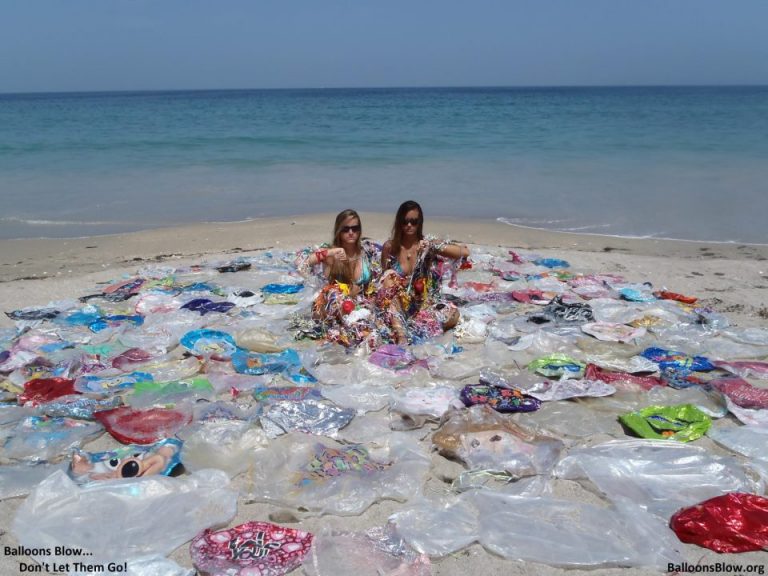
Balloons trash our beaches. Image from BalloonsBlow.
Scorpion Cove Beach on the foggy early morning of September 18, 2016. This section of Santa Cruz Island is owned by Channel Islands National Park.
It began with last Saturday’s annual California Coastal Cleanup Day. I happened to be out on Santa Cruz Island with my son’s Boy Scout Troop. Our 30 scouts made quick work of the debris on this cobble beach, ultimately cleaning up just over 2.6 kg (5.6 lbs.) of garbage off the comparatively clean beach that afternoon. Our cleanup was one of nearly 1,000 such beaches targeted for cleanup by anti-trash volunteers across the Golden State. While we had a grand total of zero balloons recovered on that Santa Cruz Island survey, our Island Packers boat twice paused on our way out to the island earlier that morning to recover two separate balloons floating in the Santa Barbara Channel. Our cleanup, the boat recovery, and a microplastics beach demonstration I ran for our scouts later that weekend all drove a series of discussions of both plastics generally and balloons in particular.
Beach trash picked cleaned from Scorpion Cove on Santa Cruz Island, September 17, 2016. Weight totaled 2.6 kg (5.6 lbs). No balloons here, but this got everyone thinking…
The pervious week saw my wife order me into the waters off of Balboa Island to get a floating balloon because “that’s what you do.” And then two days ago came a call from the Ventura County Star’s Colleen Cason asking about balloons (who had been similarly motivated to think about balloons by a brief balloon-motivated detour on a trip out to the Channel Islands last weekend). Check out Colleen’s piece here.
As almost all of these recent balloon-in-the-sea conversations have me repeating the same things over and over, I suddenly realized a little summary for anyone interested in such party pollution might be in order.
Dead Black-footed Albatross entangled in latex balloons and cotton string on Zmudowski Beach, California. Image: C.Miller/P. Brown (BeachCOMBERS).
Types of Balloons
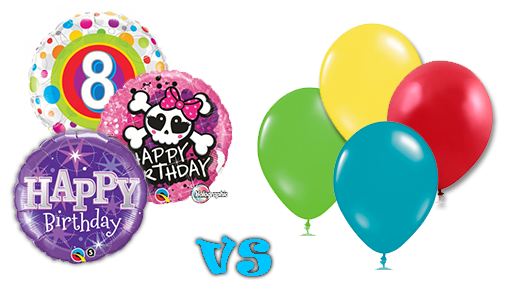
Most of the balloons we encounter in our daily lives fall into one of two categories:
Latex balloons are created from rubber. That rubber can be either synthetic (created from polymerizing a monomer such as isoprene, generally deprived from natural gas or crude oil) or natural (milked from trees of the genus Hevea, a Euphorb). The traditional term “India rubber” refers to natural latex harvested from Hevea trees, especially the Pará rubber tree (Hevea brasiliensis). Even “natural” latex is usually altered chemically before being turned into commercial rubber balloon fodder. Most often this treatment is via a vulcanization process (i.e. curing) wherein that natural latex is baked to crosslink the existing polymer with additional compounds (most typically sulphur) and in so doing alter some of the compound’s chemical properties. In the case of balloons, this vulcanization serves to make the rubber smoother, more pliable, and less sticky. Latex rubber balloons break down comparatively quickly in the environment, especially when that rubber is thin-walled and exposed to prolonged, strong sunlight/UV and high heat such as under a midday summer sun.
Mylar
“Mylar” is a trade name for metal-coated poly(ethylene terephthalate) or PET, created for NASA’s space program. Metalized PET was first used by NASA in their 1964 Echo II balloon satellite project. Most of our current commercial balloons are actually made of Biaxially-oriented polyethylene terephthalate (BoPET), a polyester film made from stretching PET. The BoPET is covered on one site with polyethylene for improve puncture resistance and on the other by aluminum (or another metal) for a maximally reflective surface. These coverings also allow the balloons to be heat sealed (something not possible with “pure” PET itself). These coatings act to make the material stronger and more durable, but consequently harder to break down once their short product lifespan is over. In such discussions of balloons by the less chemically or industry savvy, you will find “Mylar,” “polyethylene,” “PET,” and “foil balloon” used more or less interchangeably. In addition to Mylar, Melinex and Hostaphan are other common trade names you might see for equivalent materials.
How does this Mylar Stuff go away?
“Away” is always a relative term. Philosophical musings aside, a better question might be “How do plastic balloons decompose?”
Mylar is one type of plastic. And most of our modern plastics are essentially long chains of repeating carbon (what chemists call “organic”) molecules. We “decompose” plastic by both breaking up those long, repeating chemical chains and by chemically turning those building blocks into some other compound. We have essentially four options to do that:
photodegradation
Alteration of the plastic material via exposure to light, especially UV light.
thermo oxidative degradation
Alteration of the plastic material via heating up the plastic in the presence of oxygen.
hydrolytic degradation
Alteration of the plastic material via heating up the plastic in the presence water.
biodegradation
Alteration of the plastic material via feeding the plastic to microbes capable of eating carbon scaffolding and dealing with the various reactive chemical groups.
Degradation in the ocean
Consistently, the next question I’ll get asked is “how long does it take to break down Mylar.” And I always disappoint with the classically annoying professorial retort “it depends.” In reality some in the plastics industry would have you believe that Mylar simply “breaks down” quickly. Unfortunately, this is a very slow process in practice. Much slower than the break down of latex, for example. In practice pure PET will probably take at least many months to a year or more to start significantly falling apart, albeit yellowing and an increase in brittleness can being within minutes of exposure to strong sunlight. In practice the coatings, especially the metalized outer surface, act to shield the inner core plastic. Add to that these balloons are in the ocean where water temperature acts as a thermal insulator keeping the plastic from ever getting as hot as it otherwise would. Again that metal foils (sorry, too good an opportunity for a pun) microbial activity as well by shielding the internal “tasty” plastic from the microbes most able to eat and subsequently degrade it.
On the positive side, the balloon material will be exposed to potentially elevated physical trauma if the ocean is choppy or the balloon is being bashed into the intertidal. But again, this will act to breakup the aggregate balloon into small pieces, but not chemically transform it per se.
What should we do with our Mylar waste?
Ultimately synthetic plastics such as Mylar have few responsible fates, with the best course to minimize the production/use of the material in the first place. But as we seem to love our Mylar, I have ranked the possible fates in order from least to most preferable.
Contaminate our planet
Obviously a horrible idea. The vast majority of released balloons ultimately end up in waterways and the global ocean. See my section on risks below.
Burning
Combusting materials definitely gets rid of the physical mass, but this merely converts a solid waste problem into a gaseous waste problem. In the process you typically generate things none of us should be breathing.
Landfill
The most common, “least bad” of the poor alternatives. This is just what it sounds like.
Recycle
Properly collected plastics can occasionally be recycled, assuming a local waste collector has the proper fiscal incentives and technology. Most of the guides out there rapidly default to talking about the PET core of Mylar and note that regular PET is recyclable. But recall our Mylar is PET plus other stuff (especially that dang metal coating). When it comes to recycling (and particularly when it comes to recycling of low profit margin items like plastic), contaminants are the key consideration. When the material supply is homogeneous, recycling proceeds quickly and yields a high quality ending material that can reenter the production cycle for yet another life. But with each impurity the technical and chemical challenge grows and the meager profits shrink. In practice most sources seem to quickly segway into discussions of repurposing or down cycling Mylar balloons. For example, Recycle Scene suggests getting crafty and using old Mylar balloons for bird deterring flash strips.
What risks do floating balloons pose?
Initially we are talking about threats from the physical structure of the ballon (entanglement and ingestion). We have little direct evidence of acute or chronic toxicity of this plastic to individuals post-ingestion, but the ubiquity of this material and sheer additional volume entering the seas daily make this an increasingly likely potential impact. My colleagues and I as well as labs across the planet are actively working on this now (California is becoming something of a hotbed for marine debris research). Stay tuned for more info on that story.
Entanglement
Essentially anything can get potentially get entangled by a flotsam balloon. Most commonly we hear of larger animals such as seals and sea lions bound with plastic, but this is a risk to any oceanic creature (NOAA documents 200 species). I have occasionally seen balloons and/or functionally similar plastic bag waste wrapped in kelp canopies, gorgonian fans, and coral heads, showing sessile organisms are impacted by this waste as are the more conspicuous mobile critters.
Essentially here we are talking about floating objects that can occasionally resemble jellyfish. The organisms that ingest jellies are most at risk here; sea turtles, ocean sunfish (Mola mola), and the like. Other critters will occasionally ingest them (e.g. tuna) or attempt to use them as structural elements (e.g. albatross nests). When ingested, balloons can obstruct digestive tracts and pose a great risk to the animal in question of a painful, drawn out death via starvation.
Fragments of a blue latex balloon found in the stomach of green turtle stranded dead near Blackpool, UK. Image: Rod Penrose, Marine Environmental Monitoring, UK CSIP.
Are oceanic balloons a big problem?
Not exactly. Our most recent surveys of Channel Island and California mainland beaches (Miller, et al. 2016) show latex and mylar balloons combined total a mere 0.01% of the total weight of material washing onto our southern California beaches. So the problem of balloons in the sea is not that big in relative terms. Yes there are (literally) tons of balloons washing into or landing upon the surface of our seas daily, but that ultimately pales in significance to the many orders of magnitude greater stream of waste entering our ocean, much of which is plastic.
So we shouldn’t care about balloons?
No way! We should indeed care about these items!
Balloons are fantastic “gateway plastics” that provide a perfect starting point for educating the general public about our plastic-based consumer culture generally and marine debris in particular. We all know exactly what a ballon is, where it came from and how it was used. Additionally, the high visibility, shiny metallic surface of a Mylar balloon floating on the surface of the ocean is much more readily detectable than the more numerous, problematic, and ubiquitous microfibers floating through our waters or clear plastic bags floating just subsurface. Each balloon we pick up is a teaching opportunity. An example to learn about plastic and a opportunity to educate yourself about non-ballon alternatives (try surfing on over to the BalloonsBlow, for example).
Importantly, balloon waste is also something clearly within our wheelhouse. It is all too easy to blame some amorphous greedy industry polluter or faceless profiteer for our waste stream. But who is to blame for the ballon that says “Happy 5th Birthday Sally?” That would be you and me. Change always starts in the mirror. And Mylar balloons are a pretty damn shiny surface.
Additional References:
A few links to some of our ongoing research into plastic pollution:
Michaela Miller’s ESRM Capstone research on marine debris (2016).
Popular press articles about our collective work on plastics:
Today I finished my first draft for the second poster of professor Perchuck, I took in consideration that the second poster had to be similar to the first one according to the professor instructions. I’ve created a photo montage to combine the several images we receive so it can fit the poster template. I’ll be sending my draft to my team for review, by doing that I can improve the design and the similarities to the first poster.
As well after George comments on my Rodney Mullen bubble head illustration, I went ahead and start the creation of the poses for the same. At the same time I’m looking for inspiration of his work and TED talks, so I can reflect his real personality into my illustrations.
On the other hand I starts doing sketches for Driffill Elementary School’s mascot the “RAM”, we are creating an original design for them due to a similar, well exact design found in many different schools. We need to design two different design for them. The first one need to be a energetic, aggressive, powerful. Second one needs to be a smaller version, what i mean by that is to have it look cute and non aggressive for the younger children.
Bellow is two images for my work so far this week: