
Today’s Visit to Capstone in the Lower 9th Ward
Posted from Austin, Texas, United States.
Today our group headed to the lower 9th Ward to help a nonprofit called Capstone. 
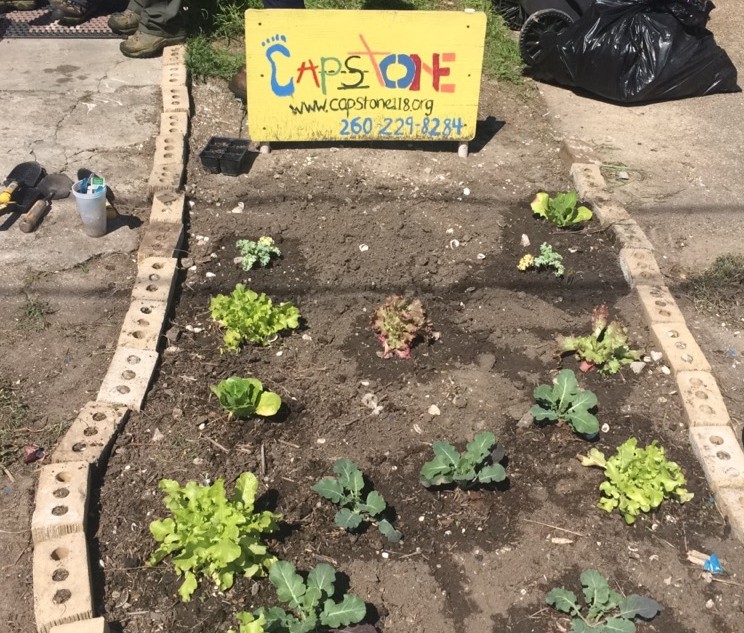
Capstone was started by David Young in 2009 and it is a small non-profit that has turned 30 blighted or vacant lots in the Lower 9th into food gardens and orchards. The main goal of Capstone is to provide food at no cost to those who need it in the community especially because it is located in a food desert. A food desert is defined as an area s parts of the country vapid of fresh fruit, vegetables, and other healthful whole foods, usually found in impoverished areas. This is largely due to a lack of grocery stores, farmers’ markets, and healthy food providers. Capstone also assists others in the community in starting their own gardens.
Capstone also has 30 beehives. After noticing a lack of bees in empty lots in 2012, David started keeping bees because there was a need of bees in the Lower 9th.  The honey is now being sold at farmers markets all over the city, and you can help Capstone with the bees in the Lower 9th Ward by donating here. The profits made from honey sales helps support the cost of providing food to the community.
Today we mowed a lawn at an adjacent lot across the street, and used the grass cuttings to feed the goats and chickens in the back yard of the Capstone house. Another  cool thing about David and the Capstone house was the aquaculture pond he had set up and that we helped finish. The system has a catfish pond in the backyard hooked up to various other tanks where plants are hydroponically grown. Some species that were being grown hydroponically were red okra, cucumbers, two kinds of lettuce, kale, and many others. We helped David put together a hydroponic trough that was set up to the aquaculture system and did so by washing expanded clay and filling the trough with the clay.
 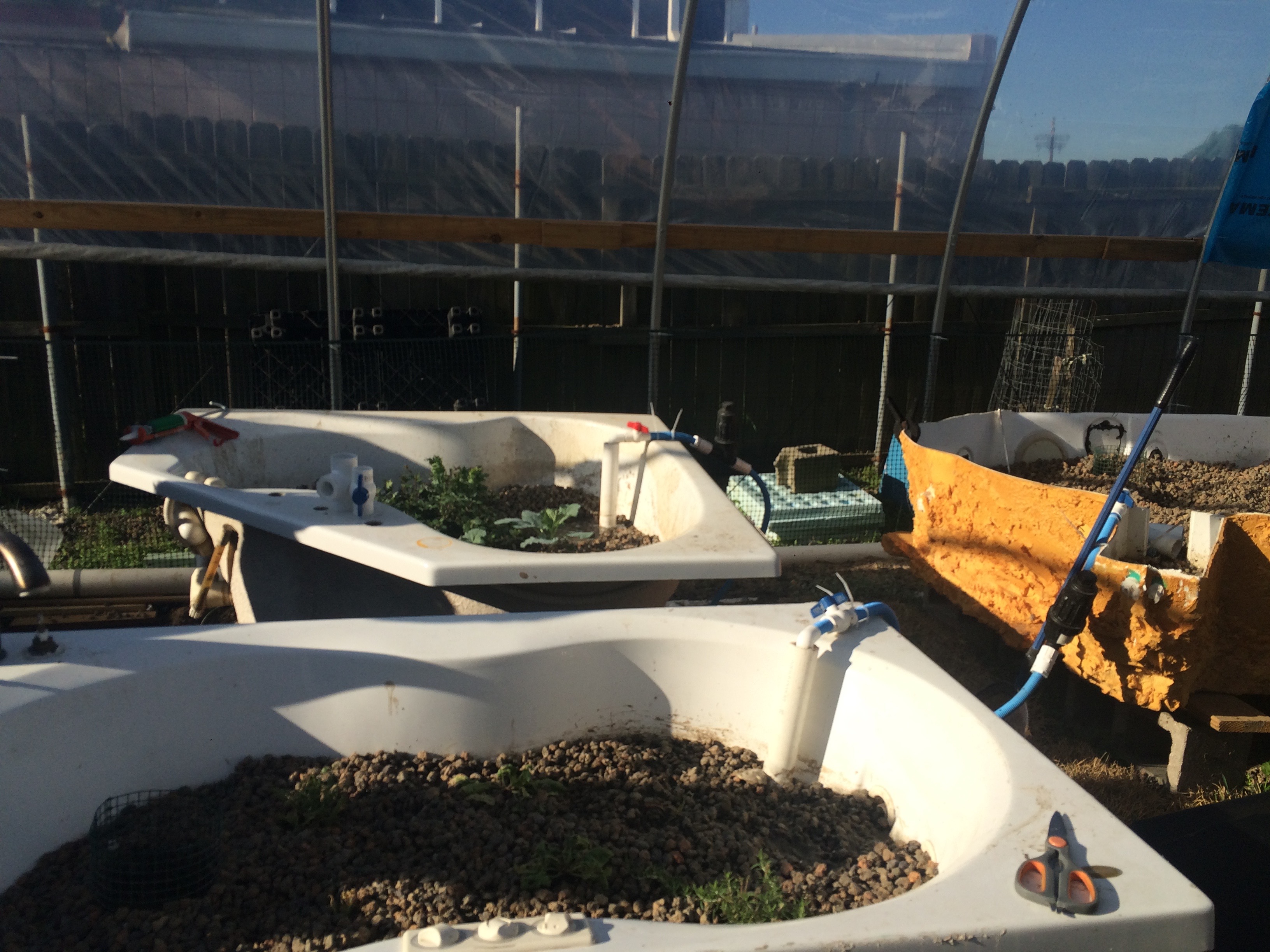 The whole system was really awesome, and it was amazing how much food could be grown in such a small area. David mentioned that 2600 pounds of organic produce can be grown with this system. Overall it was an amazing day and it felt good to help out a good cause and meet some awesome people such as David and Miss Carol.
– Michaela & Pashalle


 Wir anfangen um 9 Uhr und wir arbeiten bis 19 Uhr… Ich bin so müde aber den Sumpf ist nicht so schlecht. Ich mag es und heute mein Job war die “Machete Hacker” und ich hatte hacken und einen Weg machen. Ich liebe mein Job, weil ich mein Frustrationen mit meiner Machete verlieren hab. Wir haben vier 100m transects beendet und wir könnte mehr beenden, aber wir arbeiten so schnell warum arbeiten mehr dann andere Gruppen? In New Orleans die Traditionelle Mahlzeit seit Montags ist rote Bohnen und Reis so für Abendessen das haben wir


