2010 Earthquake in Haiti
Haiti Earthquake
On January 12, 2010, a 7.0 earthquake struck Haiti and resulting in the loss of over 230,000 lives, and the country is still working to recover from these horrible natural disaster five years later (CNN, 2015; Laurent, 2015). The effects of the large earthquake were much greater due to the poor infrastructure of buildings – a great majority of them were not built to handle earthquakes (BBC, 2014). Since the country is extremely poor, with families living on as little as $2 per day, the money to redevelop after the earthquake was simply not there and, despite the billions of dollars received in aid, the country is still struggling to redevelop and return to its previous state before the earthquake (BBC, 2014; Laurent, 2015). As a result, more than 1.3 of the country’s population was left homeless and at least 300,000 people were injured while many of the hospitals collapsed in the quake (BBC, 2014). Today, individuals can walk into the country and still see damage waiting to be fixed – buildings which are still broken, and families (at least 85,000 people) are still displaced and living in “shacks” (CNN, 2015; Laurent, 2015).
In regards to healthcare, initially, as stated, many of the hospitals collapsed, leaving the primary source for medical care inaccessible (BBC, 2014). However, shortly after the earthquake, the worldwide community brought in resources: the Dominican Republic provided medical supplies and emergency water, many countries (e.g. United States, Iceland) sent in emergency rescue teams, the Red Cross arrived and set up field hospitals, the United Nations came to provide help, and individuals from all of the world donated money to help with the care of these individuals (BBC, 2014). Additionally, as a result of the earthquake and the difficulty in accessing safe water, there was a massive cholera outbreak in October of 2010 with over 700,000 people contacting this deadly bacteria (CNN, 2015). Since the outbreak, over 8,500 people have died from cholera (CNN, 2015). While aid was able to come and act as a primary intervention, the country is still struggling at rebuilding and providing healthcare for population (Laurent, 2015).
I feel that being a nurse in this country during a huge natural disaster such as this one would be extremely challenging. While I do feel that we receive training on how to handle disasters, the accessibility to healthcare resources makes a big difference. During a crisis like this, the ability to obtain clean water is definitely at risk (especially as seen by the cholera outbreak). So, the big challenge to nursing wouldn’t necessarily be handling all the patients (although that definitely is a big concern), but it would be nursing using the resources that are available.
“I don’t have any more bandages and this person is bleeding. What can I use?”
“There is no more clean drinking water. How should I proceed?”
“This person has a compound fracture. What is my best course of action?”
These are questions and issues that we don’t normally have to deal with in a developed country, even during a natural disaster. And yet, these are big issues during a natural disaster in an undeveloped country and are definitely an issue in providing care. As a result, we need to have a combination of training and intuition in how to handle these situations.
While I believe that developed countries are prepared to handle these situations, I do not believe Haiti is yet better prepared to handle another large-scale earthquake because they have not yet managed to recover from the first one. A big portion of their recovery has come from outside aid, and, while outside aid will come again in the event of another earthquake, families are still displaced and buildings are still not all repaired. The resources are simply not there to handle another disaster.
References:
BBC. (2014). Case study: earthquake. Retrieved from: http://www.bbc.co.uk/bitesize/ks3/geography/ physical_processes/plate_tectonics/revision/7/
CNN. (2015). Haiti earthquake fast facts. Retrieved from: http://www.cnn.com/2013/12/12/world/haiti-earthquake-fast-facts/
Laurent, O. (2015). Haiti earthquake: Five years after. Retrieved from: http://time.com/3662225/haiti-earthquake-five-year-after/


 The Chatsworth train collision occurred at 4:22pm on Friday, September 12, 2008, when a Union pacific freight train and a Metrolink commuter train collided head-on in the Chatsworth district of Los Angeles, California. A northbound commuter train, holding mostly Moorpark and Simi Valley residents, collided with a Union Pacific freight train, killing 25 and injuring 135 others; 46 of them were critical. The scene of the accident was a curved section of single track on the Metrolink Ventura County Line just east of Stoney Point. The Simi Valley Acorn writes that according to the National Transportation Safety Board (NTSB), which investigated the cause of the collision, the Metrolink train ran through a red signal before entering a section of single track where the opposing freight train had been given the right of way by the train dispatcher. The NTSB faulted the Metrolink train’s engineer for the collision, concluding that he was distracted by text messages he was sending while on duty.
 The crash left 25 dead, including the engineer, Robert Sanchez, who had reportedly sent or received 43 text messages while on duty that day. His last message – to a teenage boy who he had told could operate the train later that day -was made just 22 seconds before the crash. Following the 16-month investigation, the board recommended to the Federal Railroad Administration that trains be installed with audio and video recorders to be assured that railroad employees are following safety rules. This event became the deadliest railway accident in Metrolink’s history. There was more than $7,100,500 in damage.
 Responders: this “mass casualty event” brought massive emergency response by both the city and county of Los Angeles, but the nature and the extent of physical trauma taxed the available resources. The captain of the LAFD called for every heavy search and rescue unit in the city. Responders included CEMP (California Emergency Mobile Patrol Search and Rescue) as first responders, requested by LAPD. Firefighters, EMTs, air ambulances, public health officials, sheriffs, police officers, and healthcare providers responded to this event in order to triage those involved. Hundreds of emergency workers were involved.
 This disaster is incredibly significant to me because I watched it unfold for hours on my television screen. My education was scheduled to begin the following month, but I knew that I wanted to be there. I contemplated driving to the scene but knew I was not qualified to help even though it occurred less than 15 miles from my home. This is when I knew I wanted to enter the healthcare industry, somehow, someway. Seven years later (today), I would drive to the scene without hesitation. I hope that we are better prepared for a similar event. There was no discussion about Ventura County responders, but I would assume that they could help in any way they could. All I know is that I will be there as a responder who is now qualified to help next time something of this nature occurs!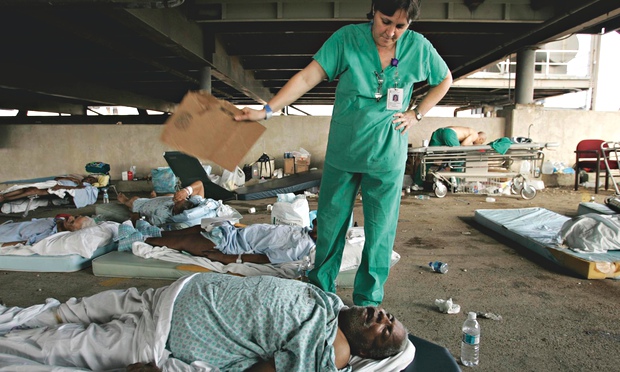
 Wow! I can’t believe this semester is almost over! Actually, the last three years have truly flown faster than I had ever expected. It is true what the students from prior semesters and faculty shared with us at our first orientation regarding the cohesiveness and strong bonds we would form with one another by the end of the three years. It is strange to think that we all sat together in a room three years ago, and didn’t speak or know one another. It feels as though we have become a family – in the truest sense of the word, with all the ups and downs all families experience.