
October 5

My favorite article: “Best way to compliment little girl”

I printed this out and gave it to my mom and told her to read it that she needed more insight on this topic. I know I talk a lot about my sister and mom but they are the epidemy of all this stuff ha. My mom constantly is engulfed with my sister and I’s looks. I make a point to never compliment them because of this. They’re are always comments on my sisters and I’s choice of clothing. When I was little my dad always made me feel like I was fat, same with my brother. It was okay to tell us that our outfit was hot or not. It was always about looks and never about the stuff that mattered. My sister is really great at picking out her clothing for her age. I always want to compliment on her choices, this article is great and teaching us how to do that. Hopefully my mom reads this and my sister too!

Poor will always be with us

Interesting article; it really emphasized the importance of asking the people who are being affected. They ask others for advice people who are not experienced in the situation at all. Then, nothings gets done.. wonder why. The article pointed out a few things I actually didn’t think of before (this happened yet)- Poverty is only discussed around holidays. -WHY ISNT IT A YEAR ROUND PROBLEM?

Global food disparity

Many are starving-many are obese and others are starved. The pictures of how these families are surviving was crazy. I am not quite connected with the relevance of this article.

ahhh let toys be toys

Target is amazing for the way they jumped on the train so quick. So many people were haters but this article does a great job at saying why toys shouldn’t be genderized. First off, it prohibits children from thinking outside the box, they grow up thinking the genders are always on opposite sides of the spectrum. Labels and colors sway children and they get what they think is right, not what they want. Different toys influence development and it is better for there child if they get to play with all different kinds.

Supposed Threats on Freedom

The 1960’s marked a revolutionary era for The United States; during its former half, America faced a pivotal decision: the Civil Rights Act of 1964. Though the legislation ultimately came to pass not every citizen shared such conviction. After having read a multitude of letters to Harold T. “Bizz” Johnson, it is apparent that people found great discomfort in aspects of the bill — some parts more than others.

In the late 60’s, there was a great fervency of opposition against the bill; persons, such as Malcolm K. Hartwig, feared a loss of freedom, a rise in Communism, and most notably the fear of losing the “sacred right of private property.” Starting in the 1920’s, a great fear of Communism had taken hold of most Americans, and this bill had been viewed as a means of infiltrating the country and promote “civil disorder.” Mr. Hartwig had this to say to congressman “Bizz” Johnson.

image

Hartwig’s primary concern — as was the case with most Americans who had written to Bizz Johnson — was Title VIII of the bill. What this essentially meant was that no one person could be discriminated against in regards to sale, rental, and financing of dwellings based on race, color, religion, sex, or national origin. Interestingly enough, the intentions behind the bill pertained only to a desire for equality and the spreading of freedom — of “American” ideals; however, many were not ready to bring others to their level.

Hartwig noted on the prevalence of Communist presence in the bill, but this was nothing more than an irrational presumption on the oppositions’ part. Martin Luther King Jr. and other civil rights activists had frequently been accused of either being or associating with Communists, but none of the relevant accusations pulled through. Though it is not directly mentioned in the letter, it is worth mentioning that the free love movement most likely influenced his train of thought, as the notion did promote anti-establishment policies.

Fortunately, the bill gained enough traction to pass. Originally proposed by President John F. Kennedy, President Lyndon B. Johnson would see the bill through. This letter — not written 10 days prior to Kennedy’s assassination — reflected feelings ubiquitous in many Americans, and it should be noted that remarks of impending doom in case of the bill’s passing were nothing but a mere fantasy.

Week 5 posting

Hey guys, Im sorry I’ve been slacking a little bit on these blog posts, I am looking forward to engaging in conversation this week, and raising our group total to a 3! I’d like to start by commenting on one of the readings and see what everyone else got from it. The article called “Global Food Disparity” was shocking! The various foods, drinks, and prices payed is unreal. I noticed that in the more developed countries, there are more branded foods, as well as drinks. The photo that caught my eye the most was the one from Chad. The fact that they only spend $1.23 for a weeks worth of food is crazy to me, I just spent 18 dollars on lunch! There is a visible difference in the large amounts of food in developed countries pictured, compared to the underprivledged countries pictured. It is something everyone knows about, however having it pictured and openly displayed in front of you is hard to see. It evokes an entirely different emotion, one that people would ‘prefer not to feel’. An article like this should go viral to raise awareness. I look forward to finishing the other assigned readings for the week.

Diverticulitis Diet

Something that I thought was interesting about patient education with GI diet for diverticulitis. This came up for me about a month ago when someone close to me actually was diagnosed with acute severe diverticulitis and was not educated about what to do about dietary needs. For someone who has diverticulitis initially they are NPO with IV fluids, and possible nasogastric suctioning if vomiting or distention occurs. Oral intake is increased as symptoms subside starting with clear liquids with a LOW fiber diet. This can also be considered a low residual diet that consists of low fiber and no seeds. Dietary management as well as consulting with dietitians in acute settings is essential for patient care to make sure they are eating the correct texture of food to prevent further damage.

Young Girls Compliments

I really liked this article a lot especially after watching the short video in class. I don’t really think about how I talk to young girls. I have two young nieces as you guys know and I don’t know how many times I’ve told them how big they are getting. and Sarah Powers said that’s not even a compliment and I pictured myself saying that to one of my sisters and my mom and I laughed out loud. Kids obviously grow up and they have nothing to do with it.  Giving compliments that are constructive are very important to the development. The author also suggests giving compliments not on the girls outfit but how creative they have been in picking the colors of the outfit. If people can learn how to give compliments to young girls maybe they won’t go to the internet looking for compliments that may lead to something scary. I learned something from this article and I’m going to put what I learned into play. Sparkly shoes and colorful outfits.

-Scott Lang

First NOAA collaboration

cims

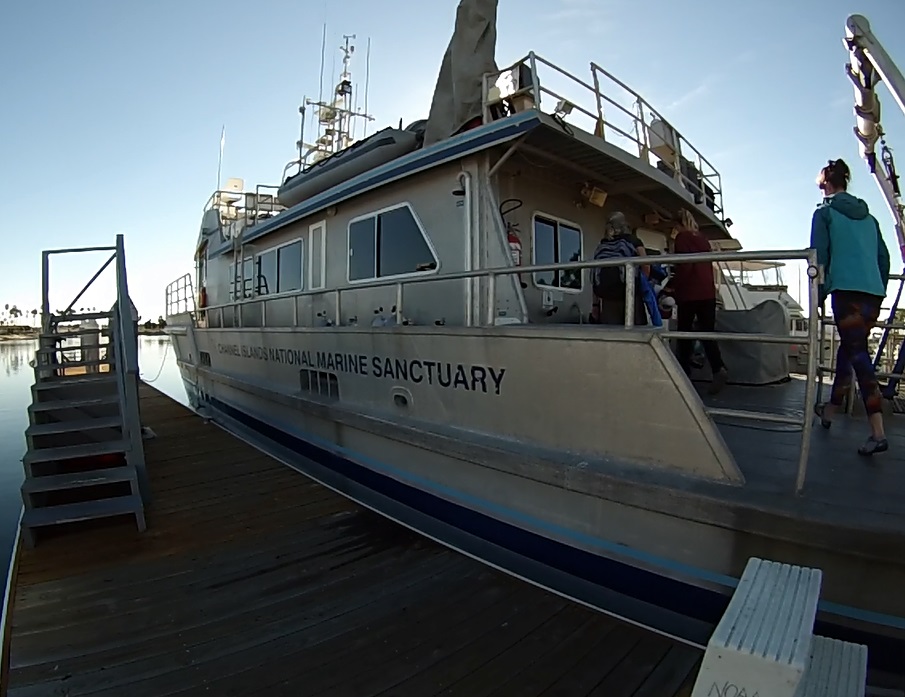
With the new cooperation between the university and NOAA, we are able to share resources in multiple ways, from the sharing of equipment, vessel usage, training and much more. The NOAA Center of Excellence for Unmanned Technologies invited our team to come observe a test mission using the AeroVironment Puma UAV aboard the research vessel the R/V Shearwater. This last Monday, team leader Paul Spaur, and member Tim Holcombe joined the multi-disciplinary NOAA team on the R/V Shearwater at the Santa Barbara Harbor. The ship set out into the Santa Barbara Channel and ran a series of 10+ flight missions, launching the UAV while at sea.

AARR Technician Tim Holcomb observes the setup of the Puma flight plan.


NOAA Corps Officer launches the Puma
a NOAA Corps Officer launches the Puma

The Puma is a fixed wing aircraft that is constructed with high impact foam, allowing it to be very light, and very durable. It was designed to land on water, and has a modular payload system. The payload systems enables it to carry a variety of imaging and sensor packages. The craft has stand alone video capabilities which can be used by one or two people, an autopilot system allowing for way point navigation, and gimbaled cameras with the ability to zoom in, and switch to an infrared / thermal view. The unit has a robust radio system, allowing for long range data, video and control. The unit is piloted by NOAA Corps Officers that have been trained and certified in flying UAVs.


20150928_120652
The Puma is recovered and placed on the back deck of the ship.


Remotely piloted technology is giving agencies such as NOAA the ability to better understand and protect natural resources. Unmanned aircraft can be used to survey and inventory marine mammals, vegetation, survey coast lines, monitor for poachers and illegal fishing and much more. Unmanned surface or underwater vehicles can monitor underwater sounds, whale and other large marine mammal behavior and migration, monitor vessel noise pollution, monitor fish populations and much more. These systems can provide around the clock monitoring and research, and offer the added benefit of reduced costs, allowing greater coverage, especially in remote places that have limited resources. The cost of one flight with a traditional aircraft could pay for nearly a season worth of flights with a UAV. In addition to the monetary savings, electric UAVs can reduce the impact to the environment by reducing the amount of noise, and emissions.

20150928_120319


Patient Education: Colostomy Care

There are a multitude of websites and YouTube videos available for patients seeking more information on colostomy care. However, for patients that do not have access to internet resources or who are not educated in technology usage, finding information may be a challenge. I found a booklet from Cedars-Siani Medical Center given to patients for colostomy education and information. I found the booklet to be helpful in the sense that it addressed troubleshooting issues such as intimacy, travel,  leakage, and how to approach friends and family about this medical condition. There is also detailed information about the anatomy of the abdomen, tips for taking care of and cleaning the stoma, skin care, and diet. I found the images throughout the booklet to be lacking detail, so I think a good supplement to this would be a take home dvd so that patients  are able to view the techniques being put into action. Below is the link for you to check it out!

Click to access colostomy_booklet2.pdf


Videos for Kids

CHLA has a lot of educational material for parents who are taking their children home and need to know how to take care of them. For instance, I found this page on G tube care for children:

http://www.chla.org/caring-your-childs-g-tube

The information listed above is certainly very helpful for parents who want to have resource in order to make sure their kids are well cared for and that nothing goes wrong. But we’ve talked a lot in various classes about different learning styles, and the importance of presenting information in a manner that will be understood. So what about videos? Sometimes just reading the words doesn’t bring it home enough. So I found some good videos for parents to watch.

What about the kids, though? If I was a little kid and I was coming home from a scary hospital experience with a tube into my stomach, I would be very nervous and upset. I think maybe learning more about what’s going on inside, and the reason why the tube is helping me to get better would help me to feel more comfortable.

I had no luck finding a fun, simple video that just explains what a G tube is, why it’s there, and what it’s doing, as well as why the stomach needs it. I found a lot of dry videos with a pediatrician explaining G tube care, but I think there’s a need for Sesame Street style health care videos for kids that are going through health problems.

At least, that’s what I think I would want.

Protected:

This content is password protected. To view it please enter your password below:

Faculty Research Roundtable

The Student Research Steering Council is sponsoring a roundtable of research-active faculty on Tuesday, October 6th. Aimed at current students, the roundtable will focus on faculty research experiences. Faculty presenters will provide advice about how to get involved in research and how they have benefitted from their research experiences.

  • Date: October 6, 2015
  • Time: 5.45-7.00
  • Place: Anacapa Commons

Roundtable Objectives:

The objectives of the roundtable are to meet faculty from across the disciplines, learn about their intellectual development, and discover how research fits into their intellectual and teaching lives. Among the questions panelists will address are:

  • What’s your background?
  • What’s your field?
  • What’s at the core of your field? (this is an interdisciplinary group)
  • How did you get interested in that field?
  • What led you to pursue graduate work?
  • How did you get interested in research?
  • What role does it play in your intellectual life?
  • What does your research center on?
  • How did you choose that?
  • Did you have mentors? What was their role in your development?
  • What advice would you give to students interested in getting involved in research?

Faculty Panel Participants:

facebooktwittergoogle_plusredditpinterestlinkedinmailby feather