
Archive for month: November, 2015
Disaster in our life time
Disaster in our life time
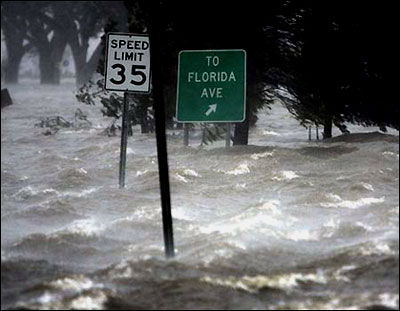
When Hurricane Katrina hit the Gulf coast in 2005. It flooded 80% of New Orleans. This displaced millions of people and caused the death of 1883 people. This flood water also trapped 100 000 people in the city. Food became scares the water undrinkable because it was flooded with sewage. There was no place to go people got trapped on their roofs or attics just having to wait to be rescued. The rich fled the city and the poor, the homeless and the elderly were trapped. There were significant barriers to providing healthcare, barriers like: people could not be reached or leave because of the massive amount of water. There was no facilities available to provide health care in. Coupled with the country being completely unprepared for a disaster on this scale. The government had to send the National Guard in to render assistance ,because the local community did not have the manpower to do so. But it took the government days to respond and when they did it was not enough because of the lack of experience in dealing with a crisis on this scale. Although FEMA had ranked New Orleans had been ranked as the most vulnerable city in case of a natural disaster nothing was done to prepare for this. This is largely due to economics and politics. Economically the government did not want to put money in to preparing for something that might happen. The top three FEMA directors were all political appointees with no experience. So today ten years later the city is still rebuilding tens of thousands of people cannot return because there no housing or jobs available to return to. I can’t imagine how it must have been a healthcare worker during that time. How to provide care with no equipment or facilities available coupled with completely being overwhelmed by the amount of people needing care. To me it seems like trying to put a forest fire out with a cup of water. This now brings up the question, “are we better prepared for the next disaster?” I personally don’t think so. People tend to forget quickly, coupled with political discourse and having the financial ability to prepare for a disaster. When it comes to finances there is a lot of disagreement about who needs to fund the disaster preparedness. Nobody wants to and in the end nobody is prepared. We can merely try and prepare ourselves and try and help as many as we can when a disaster occurs
Final Blog Post. Sad Day.
Hey y’all, it’s been fun. It was pretty cool listening to myself from the beginning of the semester, I feel like so much has happened since then and that I have learned and changed so much. It’s been a fun trip. Here we go.
Digital citizenship, at the start of the semester, to me meant just how an individual portrays themselves online and how they socialize and act as well. It was a simple 15 second definition of a phrase that holds so much more meaning than that.
Digital Citizenship now means so much more to me. It is not only how a person acts or portrays his or her self-online, but also HOW they act. I now understand the HOW part, thanks to UNIV349.
First off, you cannot be a digital citizen if you do not participate, and that is a key point I learned. Simply going online to post sad Facebook posts about my ex-girlfriend or something is not true participation and it is not being a digital citizen. Being a digital citizen means sharing, providing, understanding, learning, etc. on the internet. The internet holds such a broad sea of information, and is such a strong tool, that it is ridiculous not to utilize or share in it. Posting about current political debates, sharing ideas about how to handle ISIS, learning more about a child’s unfortunate sickness through a digital community is true digital participation, but it doesn’t stop there.
The world is changing, for better or for worse, and social media will play a huge part in it. The current digital war between ISIS and Anonymous is a prime example of the future. The internet wasn’t really used like a weapon like it is between these two organizations. It is a real first glimpse, that the public has seen, about Cyber War. This too is a form of digital citizenship, although not the best type of digital citizenship with ISIS. ISIS has grown so big and powerful due to its utilization of social media. They are recruiting via twitter, setting up plans via social networks, and spreading their crazy ideas through the internet and it is showing how powerful this global tool can be. Anonymous who already leaked multiple cheaters via the Ashley Madison username war, are taking down this tool that ISIS uses to recruit and plan. It’s just exciting to watch.
Digital citizenship is also about furthering a person’s critical and creative thinking skills. This brings me back to Michael Wesch’s TED talk about being knowledgeable and knowledge-ABLE. We are taught in schools how to be good citizens for example: pay your taxes, don’t hurt people, be honest, and a multitude of other ideas, but many people aren’t taught how to be good digital citizens. It is something that I have made a conscientious effort to further my own digital citizenship and my further academic and professional career. And that is to pay attention to social media and the web and other people’s ideas. I can reach out globally to millions of people in the world to either learn ideas, network, or even spread hope by donating money or helping volunteer organizations. I think paying attention to what people say in social media is a key component to understanding the world and how people feel about different topics. I learned that I can learn just as much from social media and videos or articles people share, as I can from academic journals.
These are all just some ideas that I have learned, and will continue to take with me through my life. And this all to me is digital citizenship.
Thanks for reading.
Responding to A Natural Disaster
According to the online news article Fire Engineering (2006), before Hurricane Katrina struck, the major concern that emergency disaster responders were worried about was the toxicity of flood waters and outbreak of disease. However, this didn’t turned out to be the real concern. When the actual hurricane struck, one of the biggest concerns that emergency healthcare responders faced was the disruption of the healthcare delivery system that impeded the delivery of adequate care to people with chronic and urgent healthcare needs (Fire Engineering, 2006). Some of the problems they faced were the lack of healthcare workers and transportation of patients from one hospital to another where safer and more adequate care can be given.. According to Fire Engineering (2006), a good amount doctors and nurses left the city of New Orleans prior to Hurricane Katrina’s landfall to avoid the disaster. In addition, there was not a system in placed and sufficient transportation available to move patients from one hospital to another where they can receive more adequate, safer care. In the healthcare field, those who responded to this disaster were local and national healthcare workers.
Based on the comments made by the mayor of New Orleans at that time, I believe that our nation has learned a lesson from this tragic event and that plans are now being implemented to respond to natural disasters in a more efficient, timely and proper manner. For example, rules are now being or have been implemented that a city wide plan for hospitals are to be in placed in case of a natural disaster. Individual hospitals are now not being left alone by themselves to generate emergency plans for their staff and patients in case of a natural disaster (Fire Engineer, 2006). Government authorities are also now required to guarantee that in an event of a disaster, hospitals are ensured to have the necessary supplies needed to care for patients (Fire Engineer, 2006). Also, when transporting patients from one facility to another, systems are now also being in placed to facilitate easier and safer hand off of patient medical records (Fire Engineer, 2006).
Reference:
Hurricanes Katrina and Rita: lessons learned by doctors and hospitals. (2006). Fire Engineering, 159(9), 44-46. Retrieved from: http://eds.a.ebscohost.com.summit.csuci.edu:2048/ehost/pdfviewer/pdfviewer?sid=cc1e1762-b95b-45a3-ac23-af99fe5e45f5%40sessionmgr4004&vid=4&hid=4102
So Much has Changed
I am not even sure where to begin… I was so nervous and timid and would get flustered over the silliest of things. I didn’t have a system to get ready or a system to start my day at the hospital. Now I am much more comfortable at the hospital and I have a working system. I know that will continue to improve and I will always be working on modifying my routine.
I enjoy being thrown in the mix and learning on the fly. I feel like a lot of nursing school was just that. The famous saying “I’ve done this a thousands times”

when the truth is this is your first time on a real person. One day that saying will be true but I will still not be an expert. I think that might be the art of nursing, never being an expert robot, but being a flexible confident compassionate person always ready for the challenge.
I am excited for the next step: being a new grad. I will take what I have learned in school and be able to stand up straight and take on the challenge with a smile!
I will one day do this a thousand times.

Final Reflection
Sometimes I get overwhelmed and feel like I haven’t learned much, but I know that those moments are when I am overwhelmed by the present and the things that I don’t know and have lost sight of the big picture. When I think about how things were in the first weeks of our first semester, I realize how far we have come. I feel ready to take the next step in my nursing career and have more responsibility with patients. I guess a concern of the final semester is getting out of practice regarding clinical skills, but I think those will come back to me fine once I get on a floor.
I had an interesting experience over the weekend that helped me see where I am today in my education and greatly appreciate it. I was speaking with a friend about their family member with a heart condition, and she asked me to explain the pathophysiology to her. As I started with the basics and got deeper and deeper into the description, I realized that I felt like I was walking through a cave with a flashlight. I could never have described everything in that cave from the outside, and I would have told you that I didn’t know much about what was in there, but as I began to talk each piece of information I shared brought up several more, just as more of the cave is illuminated with every step forward. It was a powerful feeling to realize that even though I can’t call forward everything I’ve learned at once, it is all right beneath the surface, just waiting to be called upon.
