AAG Conference

I participated in a poster session at the AAG Conference (American Association of Geographers) in San Francisco on March 31 to present my capstone research. Overall it was a great experience. At the conference I did some networking for possible job opportunities and masters programs. The conference also served as good practice to present my research as i will be presenting it again in may, at the sage student research conference.

IMG_0952

What it means to miss New Orleans

Posted from Camarillo, California, United States.

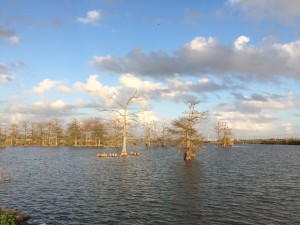
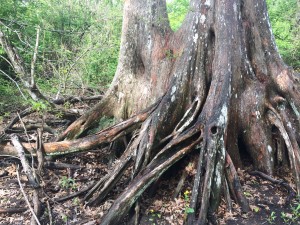
We have been back from New Orleans for about two weeks now, and life has somehow returned to normal routines and busy schedules. However, taking the time to reflect on my experience in New Orleans reminds me how much IMG_6311I have grown from this trip. It’s one thing to learn about a place via photos and lectures, but to really learn about a place you have to go there, talk to the people, and experience the culture, history, politics, and landscape. New Orleans is really such a unique place, everything about it is different than what I am used to. Seeing the powerful Mississippi River, salt water eroded marshes, swamps, and Cypress trees made me appreciateIMG_6430 a new kind of ecosystem. Seeing coastal erosion and extreme wetland loss was very eye opening to me.
Spending time in the Woodland Conservancy reemphasized the importance of conservation. All of these realizations made me happy to be an environmental science major, and I am excited to take what I have learned in this program and apply it to helping important areas like New Orleans.

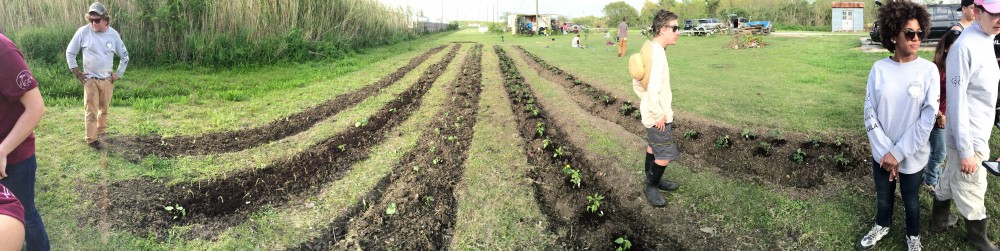
Building food gardens was also a very eye opening experience for me. Sometimes you take advantage of having easy access to food, but not everyone has that luxury. It was rewarding to be able to help build these gardens and take part in giving a community access to food that we normally take for granted.IMG_6289

Overall, I couldn’t have asked for a better experience in New Orleans. Dr. Anderson really did an amazing job at teaching us about every aspect of New Orleans that you can think of. The most important thing I learned from this trip is to never stop asking why. I learned it is crucial to always stay engaged with what is happening in the world, and even though it may seem impossible, everyone can make a difference.

Service Learning in New Orleans 2016-04-11 21:02:08

Posted from Camarillo, California, United States.

IMG_1651Taking a week to reflectIMG_1656
ect back on New Orleans has made me want to go back and do it all again. This was one of the best trips I have ever been on. It was definitely a cultural experience. Before going to NOLA, Dr. Anderson gave many presentations to prepare us. I always got a different image in my head of what New Orleans looked like. From the French Quarter to the Lower 9TH Ward and how hurricane Katrina destroyed many of the districts.

Everything about New Orleans was amazing. The one thing that stuck with me the most was the levee tour because we really got to experience how tragic Hurricane Katrina was. We started in the Lower 9th and walked right up to where the levee had broken. We stood in front of a big concrete wall. Imagining the water coming over that and breaking the levee seemed unreal. It was very emotional because in the lower 9th we still saw houses run down from 10 years ago. It looked as if it happened yesterday. We saw houses slowly being rebuilt. One thing that was very upsetting was learning about the flood insurance. It can take people years to start building because in some cases you have to find the original owners home paperwork. It was sad to imagine the struggles people are still having today.

After visiting the levee, we drove further into the lower 9th. I didn’t think it was possible to get flooding way back there. We stopped at an outdoor museum garden walk like thing that gave a storyline of Hurricane Katrina. Yet another emotional experience. At the garden walk there was a metal post and at the top there was a sign that showed the height of the flooding. It was around 6’5”. Next to it was an abandoned house. It was very depressing. There was a hold in the roof, a car seat in the house, and just a lot of junk shredded throughout.

Last trip to Santa Rosa Island of my Undergraduate Career

This weekend I went to Santa Rosa Island for the last time to survey beaches and collect data for my capstone project. This weekend was forecasted for rain all day Saturday, and it was going to be tricky finding a way to get out to the far west end of the island that day, so I was nervous I wouldn’t be able to collect the last bit of data I needed for the seasonal comparison. But thanks to Robyn, we were able to get a truck on Friday afternoon and survey Arlington and Sandy Point on Friday instead of Saturday.

Robyn, Brice, Ryan, and I left the field station around 12:30 on Friday afternoon and headed straight to Arlington. Last time I surveyed Arlington in the fall it had the most debris out of any other island beach, and this time around it was still the worst in terms of marine debris but it also had more debris than it did in October. We found a thresher shark washed up on the beach as well with a satellite tracker on it. I am excited to call Monterey Bay Aquarium and see where this shark was before we found it.

IMG_6587 IMG_6597 IMG_6589 IMG_6582

After that we booked it to Sandy Point to survey the beach before dark. Unfortunately, a group of elephant seals hauled out in IMG_6650my first transect so we couldn’t survey the first transect. It was pretty sad to see them literally laying on top of trash, but stressed to me why it is so important to address the issue of marine debris. The second transect was just as littered as the first one we weren’t able to survey, and it was surprising to see a few of the same items IMG_6719I had found in the fall survey still there. I marked items that were too heavy to bring back in the fall with a zip tie, and many of them had not moved since October, which was interesting. After Sandy Point we hiked back up to the truck, and started the journey back to the field station. It was hard to walk away from that amazing sunset over San Miguel, but we also didn’t want to be stuck in the dark either. It was a super long day but equally as awesome.

Saturday was rainy, as expected, so I used the rainy day to work in the lab. I managed to process every piece IMG_6748of debris we picked up the day before. In total, there was more debris just from Arlington, and two transects of Sandy Point than there was from all the beaches (Arlington, Sandy Point, Cluster Point, and Skunk Point) during the fall surveys. Not a bad view to work in the lab with!

On Sunday, Ryan and I headed out to survey Skunk Point. Cause dropped us off in the morning and we hiked back after we surveyed the beach. This beach didn’t have much debris in comparison to the others, and we were able to finish it fairly quickly. The hike back was beautiful as well.

IMG_6804 IMG_6768 IMG_6783 IMG_6765

Overall, it was the perfect weekend to sum up the data collection for my capstone. Unfortunately we couldn’t get to one of my Sandy Point transects or to Cluster Point, but overall it was a very successful trip!

Final Reflection

IMG_2598

Posted from Camarillo, California, United States.

Well we have been home from our trip for about two weeks now and I find myself really missing New Orleans and its people. Although this trip was exhausting it was also incredibly rewarding. One takeaway from this trip is the increased experience in conducting real-world data collection in the field. Constantly cutting our way through thorny blackberry bushes at the Woodland Conservancy was tough but we were rewarded when we collected some useful data for Dr. Anderson, not to mention the occasional adorable armadillo sighting. It was fun and interesting to look at the ratio of native vs. invasive plants in this protected area. We quickly got the hang of plant identification which really got me in the habit of looking at every plant around me, everywhere I went. I remember when we were getting an orientation at one of the community gardens we volunteered for and as I looked around I noticed the two trees right above us were a water oak and a mulberry. I felt pretty proud of myself for recognizing plants outside the field work. Doing the work at Woodlands Conservancy really made me think about the major I have chosen and how happy I am to be pursuing a career where I can do this type of work for a living. I am very happy I chose environmental science for my major and I can’t wait to utilize my skills after graduation.

IMG_2796

The community garden work was also very rewarding. I feel confident knowing all the hard work we put into these gardens are for a good cause. So many people in New Orleans do not have access to healthy food, or they can’t afford it. The gardens we worked on were created specifically for people with limited access to healthy food. Two of the gardens we worked on were already established so we just helped by pulling weeds, laying down mulch, and picking ripe food. However, we also spent an entire day creating an entire garden starting with just an empty plot. We spent hours tilling the land and picking out the grass from the turned soil just to prepare the plots for planting. Finally, after all that we planted over a dozen different veggies. It was a lot of hard work for all of us but in the end we built an entire garden for a man with a physical disability who never would have been able to do himself. Not only does he benefit from this food but so do his neighbors, all of which live in tiny mobile homes and do not have great access to food like this. All of our work gardening has really inspired me to look into gardening at my own house and study what plants grow best in what areas.

IMG_2715

While the field and garden work were truly inspiring, experiencing the cultural side of New Orleans was just as impactful. Every time someone talks about New Orleans they talk about the food, music, celebrations, voodoo, etc.  Before going, I knew all of those things were part of the culture, but I never would have truly understood them had I not spent time in New Orleans. Never have I been to a place with such a prevalent and rich culture. I don’t often visit places with such a long and remembered history. Our cultural experiences involved: shopping in a farmers market, then cooking Creole dishes with that food, listening to several local musicians, exploring French Quarter, and visiting a historical museum. It was so interesting learning about the history of the land and getting to talk to people who experienced one of the worst disasters of our time, hurricane Katrina. As we explored the city we saw more and more devastation caused by the hurricane from almost 10 years ago. It was insane how prevalent the storm still was to the land and the people. I am so grateful for the opportunity to go to New Orleans and help out the local community and study it from an environmental perspective. I really hope to visit again in the future and I wish much luck to the students who attend this trip in the future.

IMG_2204

Torrey Pine Common Garden Update!

Once this month watering is done, I will be finished collecting data on the Torrey pines growth rate and heath within each treatment. High leaf litter and high water is still the highest rate of Torrey pine saplings occurring. My hypothesis of which treatments would work best for Torrey pine sapling growth is correct, which was that high leaf litter and high water would have the most growth. IMG_9399

Trip Reflection

It’s been a couple weeks since the team returned from New Orleans, and for me personally, it’s given me some time to reflect on the entire trip. First and foremost, this trip hands down was the most rewarding trip I have ever been on. I cannot thank Dr. Anderson enough for giving me the opportunity to partake in such an incredible experience. 

New Orleans is an incredible place, full of diversity, history, and culture. Having this unique blend which is made up of its’ people, music, and cuisine, New Orleans definitely won my heart. It was a trip that was over in the blink of an eye, and I think I can speak for the entire team in saying that we were sad to leave when it came time to head back to California. 

  
Dr. Anderson did an incredible job in making sure we got a full taste of what New Orleans had to offer in everything we did. From our service-learning work; to the people we met; to the places we went, we were able to see all sides of NOLA, both the good and the bad. 

  
I believe our blog does a fantastic job of showcasing the work we did, and the places we went, so I won’t go into super detail of everything we did. But I will say my most favorite aspect of the trip was the service-learning work we did. From our transects at the Woodland Conservancy, to our community gardens and farms at Capstone and Grow Dat, we were doing our part to help this amazing place and its’ people. Which was most rewarding for me. 

  
Dr. Anderson (CSUCI), Dr. Huggins (UCLA), Dr. Lambrinos (OSU), and Dr. Patsch (CSUCI) were a phenomenal faculty team, which added to the overall experience of the trip. I cannot wait for the day when I can return to New Orleans, hopefully to continue working with these faculty members.

Here’s to a fantastic trip, full of many memories that’ll last a lifetime! NOLA 2016!


Final Capstone Trip to Santa Cruz Island

This weekend marked the last of my trips to Santa Cruz Island for my capstone project. It was my final weekend of data collection, and lots of data was collected. It was great weekend to go out to SCI as there was a fire crew on the island conducting controlled burns of previous eucalyptus debris piles. The National Park Service Division of Fire and Aviation Management sent two teams, one from Joshua Tree National Park and the other from Kings Canyon/Sequoia National Park to conduct the burns. It was such a unique opportunity to see them burning on the island, and I have to give a huge thanks to the fire teams for staying clear of my study sites and not disrupting them! I would also like to thank my assistant, Daniella Caccavalla, who accompanied me this weekend and assisted with data collection; Clark Cowan from NPS who assisted with plant identification and logistics; and finally the fire crews once again. It was the best way to end my time on Santa Cruz Island for this project!

Fresh Water testing for Microplastics begins!

Thru my WRPI/USDA grant I will be testing fresh water sources for microplastics, that flow to the ocean.  Ventura River, Perkins Estuary, Santa Clara River and Calleguas Creek will be the 4 main water sheds for testing at the river mouth into the ocean.  I am testing the soil as well as the water for the presence and abundance of microplastics.  Then I will be testing the watershed at its point source of pollution, which are the sewer treatment facilities that drain directly into 3/4 of these water sheds.

Threatened Western Snowy plovers and Endangered California Least Terns nest at the mouths of all of these water sheds as well as many other migrating water fowl.  I will be working with the Nest Monitor at Ormond beach where Perkins Estuary is located to possibly check hatched eggs for toxins as well.

I also have fresh water soil samples from watersheds in the Santa Monica Mountains that are not point source fed and have found micro plastics.  I am curious to see what the difference in abundance and types of particles we find in these different water sheds.  Hopefully with this information we can work on more policy change and infrastructure changes to the way we pollute our watersheds with plastic particles.

The Vulnerable Professor

Recently, I’ve been examining Brené Brown’s research about vulnerability and it’s really got me thinking about what it means to college and university professors, as well as how it may be acting as a barrier to innovation. I suspect that vulnerability may seem like a strange topic to many of you. However, my experiences, which I share below, […]