RSS Feed Test 1

This is from AARR Blog.

This is from AARR Blog.
The following blog post developed out of a larger research project that explored best practices for building a sense of community within online/blended classrooms. That study was supported by a Faculty Fellowship from CI’s Teaching & Learning Innovations Group, and was conducted by Kellie Prather (undergraduate student at CI), Brandon Burns (undergraduate student at CI), […]
Every year August seems to roll around faster and faster. This year is no different. Unbelievably, students will be back at CI and classrooms will be buzzing in a few days. This is the time that of year that faculty put their heads down and work diligently to prepare classes for the students coming their way. […]
Hello! Information for each of my English 105 and English 102 courses is available via the menu on this site. Just select the link for the course in which you are enrolled to access the syllabus, course calendar, assignments, and so forth.
Feel free to take a look around to see what we will be up to this semester and feel free to email me with any questions. Thanks and I look forward to meeting you!
Professor Jordan

Ojai oil tank on fire, August 5, 2016. Photo by Captain Mike Lindbery, Ventura County Fire Department.
A now more than 12 alarm fire erupted within the past hour in Ojai, California (in western Ventura County). The incident was reported at 8:35 a.m. near Highway 150 and Topa Lane roughly here ( 34.438417°, -119.132719°):  The incident was originally thought to be a burning oil derrick, but subsequent reports have clarified that it is instead a more vertical storage tank that is aflame. The Ventura County Star is reported it to be a 1,762 gallon holding tank at 9:20:
Fire crews battled a petroleum fire outside Ojai Friday, authorities said. The blaze was reported at 8:35 a.m. near Highway 150 and Topa Lane near Ojai, officials said. Officials reported a tank holding approximately 1,762 gallons of petroleum was on fire. Crews at the scene reported the tank was in danger of collapse. Authorities also reported an explosion had occurred at the scene. Authorities said multiple workers required medical attention due to exposure. The blaze threatened brush in the area, officials said. More than 12 units responded to the incident, according to fire officials. Luckily this happened very close to Ventura County Fire Department’s Station 20!
Apparently several people are injured and needed medical evacuation. Concern at the moment is on both containment of the flames, associated air toxicity, and preventing the fire from spreading to the adjacent scrublands already tinder-dry in year four of our state-wide drought (for context see this morning’s LA Times story on the numerous state-wide fires now engulfing California). Of additional concern in the wake of the immediate knocking down of the flames will be mobilization of burned and unburned oil and oil slurry offsite or into the surrounding soil via the hosewater and suppressants. Our Ventura County Fire Department rocks and they will do everything they can to both stop the flames and minimize impacts from the oil, but there is only so much you can do. Oil fires can be difficult beasts. Video via VC Star. I will update this post throughout the day when new developments arise and details are made available. Update August 5, 2016 At 10:13: KEYT’s coverage is here, but no new details. ABC7 has an aerial photo:
THIS JUST IN: Ventura County firefighters working on oil tank fire in Ojai, worried it could spread to nearby brush pic.twitter.com/K25jnVW3OT
— ABC7 Eyewitness News (@ABC7) August 5, 2016
Update August 5, 2016 At 10:24:

Ventura Avenue Field in 1928, one of America’s greatest petroleum strikes at the time. Image: Museum of Ventura County.
In reference to some comments I have see: yes, Ventura County’s “back country” has been the epicenter for oil extraction for more than a century. See for example: Drilling down into Ventura’s history from the VC Star and
Update August 5, 2016 at 11:50:
Updated injury report shows two workers were injured in the initial blast/ignition. Fire crews on scene are letting the tank burn down while monitoring the surrounding area to assure the fire will not spread from the immediate tank area itself. Om addition the incident may now have a formal name: the Topa Fire.
VC Star has a few more details.
#TopaIncident Product is crude oil. Firefighters letting product burn down while monitoring nearby brush. @VCFD pic.twitter.com/GM1KFKx9zL — Capt Mike Lindbery (@VCFD_PIO) August 5, 2016
KTLA5 has another raw feed aerial video of the burning tank:
Update August 5, 2016 at 12:53:
Thankfully in now appears the 5,000 gallon oil storage tank only had an estimated 1,800 gallons of crude in it at the time of the initial explosion.
The roughly 5 m (15 ft.) high and 3 m (10 ft.) diameter vertically-oriented tank is still intact according to the midday news images and video of the site. This is good news and increases the chance we will get through this with a significant surface spill.
Fire officials are still apparently trying to track down the actual owner of the oil, with some outlets noting that the site has apparently been leased to an as yet undisclosed operator who presumably owns/controls that oil.
Every two years the Olympic Games roll around and we are treated to endless commentary and an amazingly small amount of actual sport (at least on NBC Universal Channels that have a stranglehold on U.S. broadcasts via their $7.75 billion contract). Outside of the NBC hype machine, we have seen a pattern in recent years of news stories critiquing almost every aspect of the host city’s Olympic endeavor in the lead-up to the opening ceremonies. From exposés on the displacement of marginalized peoples for new infrastructure to massive budget overruns to illegal and institutionalized drug doping by athletes, these investigations often question the logic and raison d’être of the entire Olympic endeavor. Of particular interest is the rising sub-genre of environmental quality reporting generally focused on athlete-relevant or visiting reporter-relevant environmental quality (see for example what happened in Beijing and Sochi). Rarely do these concerns survive the lighting of the Olympic Flame. But this year might be different. This year we have data. Lots and lots of environmental quality data. And it paints a pretty disappointing picture.

Rio de Janeiro’s aquatic Olympic venues. Figure: The Washington Post in 2015.
When the International Olympic Committee awarded the 2016 Summer Games to Rio de Janeiro in 2009 on the heels of FIFA’s 2007 announcement of Brazil winning the 2014 World Cup, it seemed to be Brazil’s coming out of sorts as a global socioeconomic heavy hitter. As the “B” star of the new axis of emerging “BRIC” economies that were predicted to rewrite the global order of things, Brazil was seen as finally coming into its own. This was to be something of a culmination of the forces at work since the mid 1990s. Brazil had their “of the people” champion in President Lula da Silva who sought to lift the masses of Brazilian poor out of poverty, had become a global agricultural superpower in everything from beef to soy, was the 12th largest oil producer in the world, and seemed to be making headway reconciling its horrid racial divisions within the context of a burgeoning democracy in the global south.

Coastal Brazil incarnate. Rio de Janeiro’s Guanabara Bay and Sugarloaf Mountain. Image: Medium.
Everyone knew the coastal and inland waters were bad, with Guanabara Bay the epicenter of concern for the 2016 Olympics. At the time the Brazilian government committed to “regenerate Rio’s magnificent waterways” via new, permanent sanitary infrastructure. The much-lauded, maverick billionare businessman Eike Batista pledged some of his then-immense personal fortune for both some of the initial cleaning and to help jumpstart those associated improvements. Later this morphed into a consortium of the Dutch government, several Brazilian and international environmental NGOs, and various other Rio business interests proposing holistic solutions to Guanabara Bay’s pollution. It was very heady stuff. Their solution would eventually morph into the Clean Urban Delta Initiative and span an array of more than 20 sub-plans, each with more narrowly targeted outcomes ranging from temporary skimming of floating plastic to the installation of treatment wetlands sized to clean those waste streams prior to their discharge into the ocean.
But that was a long time ago. And then, you know. Reality set in.
Here in August 2016, Rio de Janeiro and Brazil as a whole look nothing like the hope engendered a decade ago. The Brazil of the summer of 2016 is a country of crippling recession, seemingly ever-expanding crime waves, and growing distrust between police forces and the poor residents of flavelas (à la Baton Rouge). Add in a huge dose of Zika virus-induced fear. Then top it off with the landmark “carwash” (Operação Lava Jato in Portuguese) corruption scandal that has already removed the President from office, seemingly touched nearly all of the major politicians across Brazil, and retrograded federal environmental policy to more corporate-friendly policies from the pre-Lula era.
All of this translates into a tempest of distraction for those hoping to improve the fetid coastal environment of Rio’s shores. There has simply been no bandwidth or fiscal wherewithal to resolve these issues. Environmental concerns have become a very low priority for local, state, and federal authorities alike. The Mayor of Rio is out of money, the state and federal governments are paralyzed by the scandal, and that billionaire who ranked as the eighth richest person in the world in 2012 is broke and being prosecuted for numerous counts of insider trading (his net worth may be into the NEGATIVE billions of dollars at least check).

Copacabana Beach in a rare people-free moment. Image: Adam Jones.
This coastal city’s most recognized landmarks include the Christ the Redeemer statue towering high above the cityscape and the iconic sandy beaches of Copacabana and Ipanema. But the more significant landscape element for our story today is the massive human population at the heart of this megacity. Rio de Janeiro’s roughly 6.5 million residents make it the second most populous city in Brazil and sixth largest in the Americas. More than one-fifth (1.4 million) of these residents reside within the network of flavelas sprinkled across the hillsides and former wetlands buffering the urban core. And the problem isn’t merely a favela issue; a 2015 survey reported 3.6 million people across 100 Brazilian cities lacked even rudimentary connections to sewer systems. These haphazard, unplanned shanty towns have little to no functioning municipal sewage systems, with most dumping raw sewage into the waterways that in turn dump into ocean. This waste stream compounds the already horrible state of waste collection and treatment across the city. Amongst other things, this has produced a massive coastal water quality crisis whose growth paralleled the rise of this recently-robust economy.
The day before the opening ceremony, Rio’s coastal waters are not the kind of places you want your kids splashing about in. Rather they are ripe with “raw” human waste, garbage, human viruses and fecal indicator bacteria, according to a 16-month-long Associated Press study widely circulated last week.
The AP ran simple coliform and DNA/RNA Virus Mini Kit assays as well are more sophisticated viral counts and quantitative PCR at various olympic and paraolympic venues hosting rowing, kayaking, canoeing, sailing, and (gulp!) open water swimming. These methods gave them the basic “quick and dirty” water quality parameters that are pretty standard across most of the world, with generally accepted critical points for health concerns and management triggers.

AP’s Rio water quality testing locations in the lead-up to the 2016 Summer Olympic Games.
In brief, the fractured and half-hearted Brazilian attempts at infrastructure improvement and pollution abatement have come home to roost. For example, most of the 17 pollution screening efforts are fractured and ineffectual, sewage treatment plants are operating well below their operating capacity with plants not even necessarily plumbed into the sewage system, and then there are the dead bodies just dropped on the beaches (where everyone gets to play volleyball in a week). Brazilian TV reported that about 8,200 liters of untreated sewage flow into Guanabara Bay EACH SECOND. Merged with that AP data, this means ingesting three teaspoons of bay water would produce a “99 %” chance of infection. The Atlantic reported back in in March 7 to 9% of sailors were getting sick while practicing in the Bay, a rate that the International Sailing Federation has argued is acceptable (but exceeds the U.S. EPA maximum illness rate for swimming, 3.6%).
| site | date | human adenovirus (min) genome copies/liter | date | human adenovirus (max) genome copies/liter | date | fecal coliform bacteria (min) MPN/100 ml | date | fecal coliform bacteria (max) MPN/100 ml | |
|---|---|---|---|---|---|---|---|---|---|
| Point 1. Marina da Gloria | Sep 2015 | 343,000 | Jun 2015 | 127,000,000 | various | not tested? | various | not tested? | |
| Point 2. Marina da Gloria | Mar 2015 | 3,230 | Jun 2015 | 533,000,000 | Mar 2016 | 24,196 | Dec 2015 | 68,000 | |
| Point 3. Rodrigo de Freitas Lagoon | Sep 2015 | 372,000 | Mar 2015 | 1,730,000,000 | Apr 2015 | 19,863 | Sep 2015 | 41,066 | |
| Point 4. Rodrigo de Freitas Lagoon | Feb 2016 | 36,600 | Mar 2015 | 956,000,000 | Apr 2015 | 24,000 | Sep 2015 | 36,540 | |
| Point 5. Copacabana Beach | May 2016 | 842,000 | May 2016 | 414,000,000 | various | no detection | Feb 2016 | 4,860 | |
| Point 6. Ipanema Beach | Aug 2015 | 0 | Jun 2016 | 33,500,000 | various | no detection | Aug 2015 | 19,863 | |
| Point 7. offshore inside Sugarloaf sailing course in the Guanabara Bay | May 2016 | 932,000 | Nov 2015 | 85,300,000 | various | no detection | Aug 2015 | 19,836 | |
| Point 8. offshore inside the naval school sailing course in Guanabara Bay | Apr 2016 | 1,130,000 | Aug 2015 | 34,800,000 | various | no detection | May 2016 | 17,329 | |
| Point 9. offshore in the Rodrigo de Freitas Lagoon | May 2015 | 801,000 | Jun 2016 | 331,000,000 | various | no detection | Sep 2015 | 3,150 | |
| Point 10. The Quebra-Mar area of the Barra da Tijuca beach | Mar 2016 | 0 | May 2016 | 101,000,000 | various | no detection | May 2016 | 24,196 | |
| Point 11. Barra da Tijuca Beach in front of Sheraton Hotel | Mar 2016 | 0 | May 2016 | 87,600,000 | various | no detection | May 2016 | 3,555 | |
| Point 12. Leblon Beach | Mar 2016 | 0 | May 2016 | 8,570,000 | various | no detection | various | no detection | |
| simple grand mean | 371,653 | 370,147,500 | 6,187 | 23,840 | |||||
| reference levels | |||||||||
| US marine recreational water criteria for FIB (= danger level) | 104 | ||||||||
| European marine recreational water criteria for FIB (= danger level) | 400 | ||||||||
| Jiang et al . 2001 viral ranges detected in SoCal marine waters (Malibu to Mexico) | 880 | 7,500 |
This is data is compiled from the summary report published July 2016 by the Associated Press. Monitoring locations were sprinkled across various Olympic venue sites in Guanabara Bay. Full data were not provided and so this emphasizes the max and minimum values based on geography. I have provided relevant reference levels to make interpretation of these values easier for the non-expert.
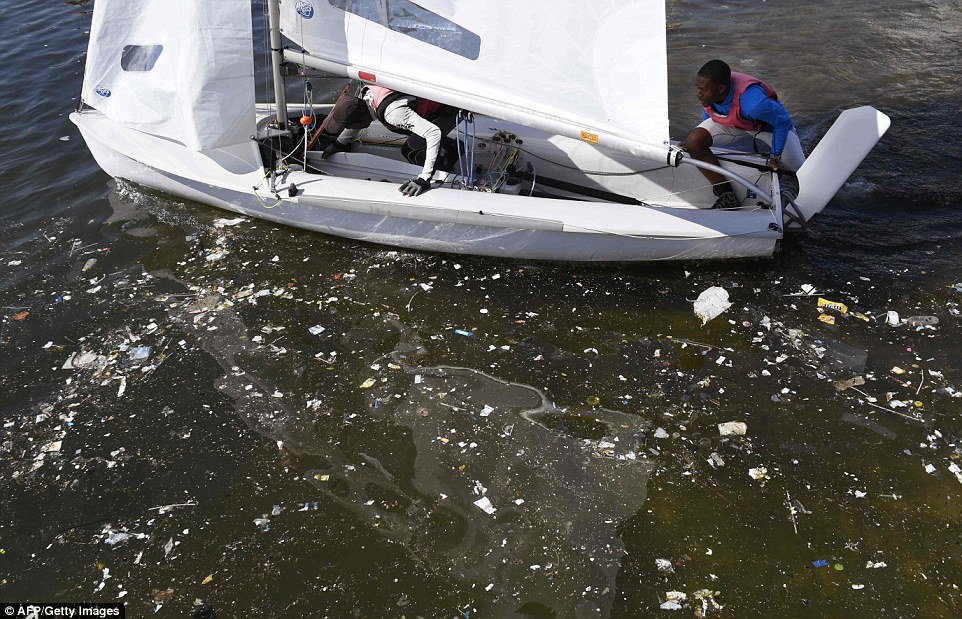
Waste litters the water as two sailors prepare for a training session at Rio de Janeiro’s Guanabara Bay. Image: AFP/Getty Images.
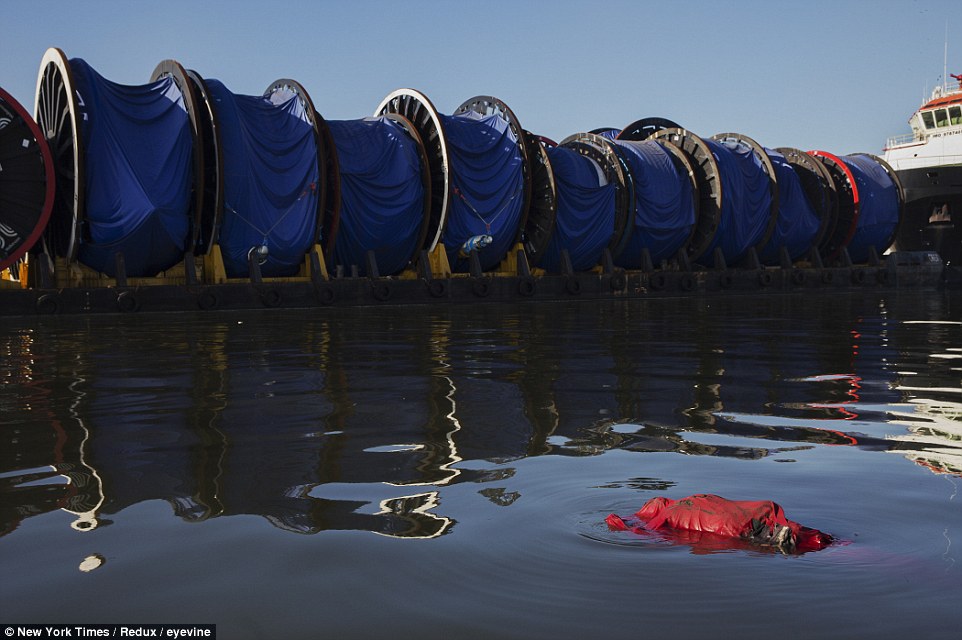
A body floats in the waters of Guanabara Bay, a sailing venue for the 2016 Olympics, in Rio de Janeiro, Brazil. Image: NY Times.

The edge of Rio de Janeiro’s Guanabara Bay. Image: AP.
The pollutants lurking in these waters are a who’s who of everything you might expect from a modern megacity and international port:
While I can find no direct reported measurements of the following pollution categories, I strongly suspect these are impacting environmental quality in the region based on the gross conditions present in Rio and the background materials I have been reading:
We already mentioned the lack of modern sewage treatment as a key stressor of water quality. We next need to add in good ol’ oil spills and related industrial releases.

Paulo Roberto Costa, a former Petrobras executive, being escorted by police after appearing before a Brazilian congressional committee investigating allegations of corruption. A Range Rover intended to be a gift to Mr. Costa led police to search his office and eventually to arrest him, and he later cut a deal with prosecutors. Credit Ueslei Marcelino/Reuters.
The wider world often associates Rio with scantily clad beach goers or folks dancing salsa during Carnival, but rarely associates this port city with oil and gas production. It is in fact better to conceive of this coastal port as the center of Brazil’s energy sector that it in fact is. Oil and gas accounted for 13% of the country’s GDP in 2014 (the most recent numbers I could find). Rio is the engineering and logistics center for the massive push to exploit reserves under deep water salt domes far offshore. The biggest player here is the state-owned oil company Petrobras, a major part of the unfolding “carwash” corruption scandal ripping apart Brazil this summer.
Unfortunately where we have production, we have spills. Rio is no exception to this. Add to this the typical lack of environmental oversight common in “emerging” or “developing” economies. Most of the oil and gas industry is operating here and across the country without strong environmental permitting. Environmental concerns take a clear back seat to business concerns. For instance, we see zero oversight for underground storage tanks, older refineries simply grandfathered into the production chain without serious attention to modernization to either reduce emissions or improve environmental safety, and weak institutional responses from governmental agencies when a mishap does indeed occur.

Comperj, a giant refinery and petrochemical complex built by the state oil company, Petrobras, in Itaboraí, Brazil. The unfinished project was originally planned to cost $6.1 billion, but a state audit put the price closer to $50 billion. Image: Andre Vieira for The New York Times.
Here is a brief rundown of a few recent notable oil spills in and around Rio.
Significant spills along Rio’s coast date back to at least March 1975 when the Iraqi-flaged tanker Tarik Ibn Ziyad ripped open and as it was pulling into the Sao Sebastiao terminal at Santos, releasing an estimated 6,000,000 liters (1,585,000 gal., 37,700 bbl) of light crude oil over the next 15 hours into the bay and oiling the outer coastline. The spill was fairly dramatic with spilled oil catching fire both on the shores of the oiled Island of Fundao and the surface of the Jequia River (home to a biological reserve) wherein an unspecified amount of mangrove forest burned to the water line. As was so often the case back then, rudimentary monitoring techniques and response capability translated into relatively poor quantification of the impacts of this spill and few details can be found in either English or Portuguese sources.
By the 1990s Brazil’s nascent environmental oversight and assessment capabilities were another story.
An estimated 2,000,000 liters (528,000 gal., 12,600 bbl) of oil spilled from Petrobras’ pipeline running into their REDUC refinery in 1997, primarily flowing onto the coastline and into coastal waters. We saw significant oiling of littoral regions and the first big acute toxicity to wetlands and fish communities since the 1970s. This would set the stage for cascading implosions of Rio’s fishing industry over the ensuing years. This 1997 spill drove more than half the fisherfolk to seek alternative employment due to collapsed fish stocks and an associated inability to collect enough fish even for subsistence harvest. It also signaled the first widespread public outcry against oil spills and “business as usual” in the petroleum industry, but in practice almost nothing changed. It “primed the pump” for the public response to the spill three years later.
The most ecologically significant spill in the past few decades in the Rio region was arguably the January 2000 Guanabara Bay spill. In a redux of the 1997 spill, the Petrobras pipeline bringing crude into their REDUC refinery ruptured and released 1,300,000 litres (343,000 gal., 8,200 bbl). Oil was dispersed widely across the northern and northeastern regions of the bay fouling various islets, rocky beaches, sandy beaches and mangroves. Acute toxicity was clearly observed as we saw conspicuous die offs within the fringing mangrove community and many fish and invertebrate populations.

Workers clean an oil contaminated beach off Rio de Janeiro’s Guanabara Bay in 2000. Image: AP Photo/Renzo Gostoli.
Quite disturbingly, total Polycyclic Aromatic Hydrocarbons (PAHs) in seawater sampled at most monitoring stations ten days post-spill were within same range of PAH previously reported for Guanabara Bay (0.05 to 2.97 L-1). Fish tissue from two species in the immediate wake of the spill showed no significant elevation in PAH concentrations relative to reference samples from the same sites one year prior to the spill (15.8 to 76.3 µg kg-1) suggesting no elevated threat to the human health from this particular spill. One interpretation here was that there was nothing to worry about as we saw no elevated “oil signal” post-spill. Alternatively, you could read these results with grave concern, interpreting this as a bay so contaminated from day in, day out pollution that even such a massive spill doesn’t elevate exposure or risk. It was most likely the latter as SCAT surveys post-spill showed that at least 70 km of coastline was heavily oiled. In addition, coastal sediments showed clearly elevated PAH concentrations (see Gabardo, et al. 2003) relative to pre-spill concentrations.
In 2007, Petrobras was ordered to compensate fishermen $300 million for the loss of their ability to fish due to the outright destruction of the wide range of fish stocks. Sixteen years post-spill and nine years post court order, no fishermen have yet to see any money. I can find no evidence of significant ecological recovery of these impacted regions. Tech Insider reported the current situation of the fishing community last month:
Alex Sandro Santos, the president of the Fishermen Association of Tubiacanga, is a third generation fisherman in the area. Fifty years ago, he says, you could find dolphins swimming in Guanabara Bay. When a Petrobras petroleum plant opened up four decades ago, things started going downhill.
“With the growing population here, everything goes in the bay without treatment,” he told Tech Insider during a visit to Guanabara Bay in 2015.
At the beginning of that year, Santos recalls, a journalist from local publication O Globo threw a red ball into his bathroom toilet. He later found it in the bay.
Most fishermen have second jobs. They’re construction workers, cleaners, and boat renters for tourists on the side. Younger local residents see the dismal future in fishing on the bay and have started looking elsewhere. “There are lots going to deal drugs,” says Sergio.
In something reminiscent of the 2010 Deepwater Horizon blowout, a Chevron-led drilling consortium working the Frade field 120 km northeast of Rio de Janeiro lost containment of their exploratory well in November 2011. That Campos Basin blowout the ran for four days and released 590,000 liters (156,000 gal., 3,700 bbl) of crude. Insufficient capping of the wellhead allowed the higher-than-expected wellhead pressures to kick out drill muds and defeat the cementing. Favorable winds and currents kept oil no closer than 100 km from shore and appear partly responsible for the amazingly low final settlement associated with clean-up/spill. Chevron shuttered their well for 18 months and ultimately settled with the Brazilian government for $135 million, a considerable “victory” f0r the company considering the government initially asked for $18 billion in damages. While Chevron was in no way responsible for the failed Olympic-driven efforts to clean up Rio’s waters, such a large settlement could most likely have assisted with several of measures identified in the Clean Urban Delta Initiative. Brazilian petroleum regulator ANP fined Chevron for failing to follow drilling plans, but absolved the company of negligence. Given the corruption and payola now swirling around Petrobras, the scuttlebutt at the moment is whether Petrobras’ 30% stake in the Frade consortium played a role in their winning such a light settlement.

June 2015 Petrobras pipeline spill. Image: AP.
The most recent release in the region was yet another pipeline spill, albeit a very small one. The June 2015 rupture of a Petrobras pipeline once again doused coastal wetlands in an estimated 600 liters (159 gal., 4 bbl) crude as it flowed down into the sea with an estimated 50 liters (13 gal.) making it to ocean waters. The “carwash” scandal was initially suspected of playing a roll with union officials and industry analysts concerned given the scandal appeared to be diverting the company’s attention away from routine operations and maintenance. But it quickly became clear thieves caused the spill as they attempted to steal oil.
As of 2016, the frequency of spills and ubiquity of petroleum contamination in both water and animal tissues are a source of increasing consternation for fisherfolk across Rio de Janeiro’s coast. Ongoing investigations into multiple deaths and disappearances of fishermen since the 2000 Guanabara Bay spill appear related to their calls to change the business as usual culture pervading the region. Investigations into that violence now appear to be at a stalemate. Fisherman Lauro Coelho Jr. told NPR last June “the oil industry is involved in an environmental and economic conflict in which there is a clash between development and the environment. And in the midst of this conflict, deaths occurred.” Coelho went on to say he had no evidence directly linking the fishermen murders and threats to any specific polluter. Petrobas has publicly stated their company is “unaware of these incidents and rejects any act of violence against the fishermen… All of our projects rigorously follow the various government environmental controls and are licensed.”
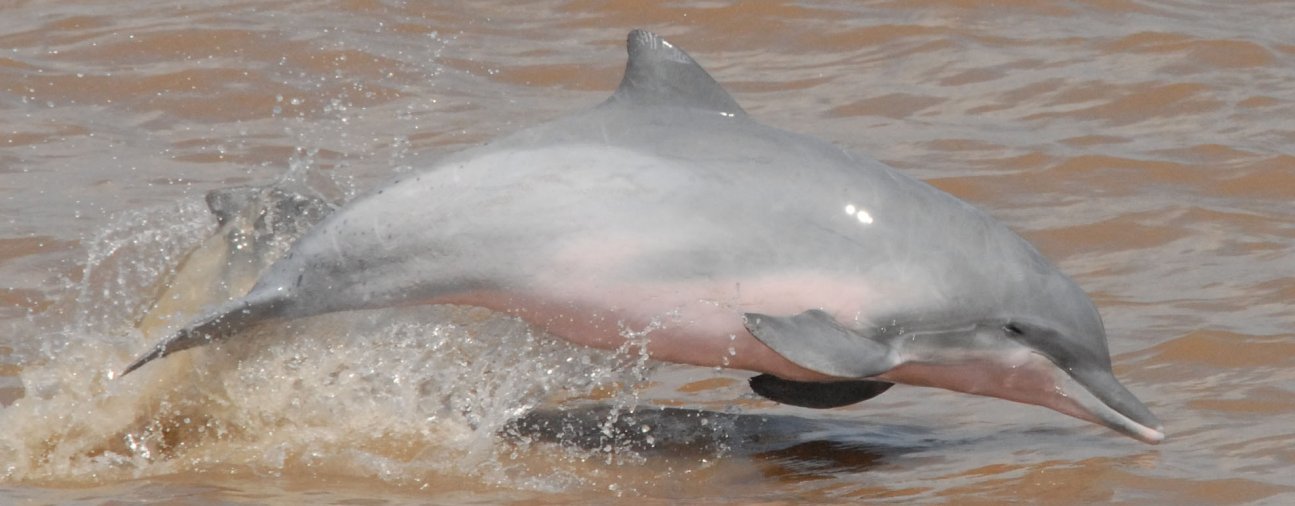
The rapidly locally disappearing (and data deficient across its global range) Somalia fluviatilis. Image: Fernando Trujillo.
There are a variety of metrics showing reduced ecological structure and function across Rio’s coastal zone over the past several decades. But perhaps the clearest comes from the trajectory of the freshwater dolphin the tucuxi (Sotalia fluviatilis). Sergio Ricardo, director of the Bahia Viva NGO told Vice Sports a few months back:
“The great environmental indicator of the level of pollution in the bay is the tucuxi. In 1995 Rio de Janeiro State University identified 800 [tucuxi] in the bay, ten years later there were 400, and now there are just 35,” said Ricardo. “They’ve been described as the most contaminated mammals in the world.”
The fate of the tucuxi, a freshwater dolphin found in Brazil, also highlights the failure of the Rio state government’s Guanabara Bay Depollution Program, which began in 1995, has been extended several times, and has failed to produce significant improvements in the condition of the water.
According to Ricardo, Rio’s historic inability to clean up the bay meant the city’s pre-Olympic promises rang hollow. “We knew that the pledge to clean 80% of the waters of the bay wouldn’t work,” he said angrily. “The International Olympic Committee was highly irresponsible. If the depollution programs hadn’t worked in 20 years, how could they accept this target, which was obviously based on false promises?”
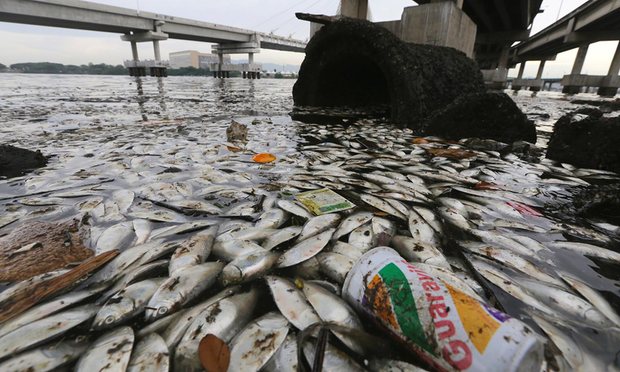
Dead fish float on the edge of Guanabara Bay in 2015, a part of which is the Rio 2016 Olympic Games sailing venue. The polluted bay receives a majority of the city’s raw sewage and officials have recently admitted their cleanup goals won’t be met in time for the Olympics. Photograph: Mario Tama/Getty Images.
51-year-old fisherman Robson Salgado de Oliveira told the same reporter:
“There was shrimp in the bay up until two or three years ago. And anchovies and hake, but now they’re basically extinct. I have to travel further and further away every day to get a decent haul. I work two shifts per day, starting at 3 a.m., and make around the minimum salary.”
Axel Grael, vice mayor of nearby Niterói and co-founder of an NGO promoting both sailing and environmentalism told the The Washington Post last year, “In the Glória Marina, the conditions are terrible… We had enough time…to make a leap in the environmental quality of the bay. There was a lack of political will and management initiative.”
Brazilian Olympic sailor Isabel Swan who won Bronze in 2012 defeatedly noted last year that she “always believed in the project Rio 2016 as something good for Rio. But the way things happen, the delay in things, the bureaucracy, these things mean that Brazil does not go forward. This is my sadness.”
And just in case you think all this attention will amount to continued global pressure or assistance from abroad post Opening Ceremony, you have to only go so far as to ask some of the athletes what they think. In an essay for The Guardian, U.S. Olympic rower Megan Kalmoe infamously addressed the polluted water concerns head on last week. She used not so subtle language and left no doubt that she was done with any discussion of environmental quality:
I have worked for 10 years to get to this point and will continue to work as hard as I can over the next few weeks to make the most of this very special and unique opportunity.
But all you want to do is talk about sh*t in the water.
My request to everyone who is fixated on sh*t in the water: stop. Stop trying to ruin the Olympics for us.
I can’t be sure when the first headlines about the water quality in Rio appeared and the conversation really started. But ever since then, it seems like it’s all people want to talk about. And I can’t really understand why. At this point, it is known that there are issues with the water quality. It is known that athletes are going to be at risk for illness. It is known that we are going to have to be smart, hygienic and take precautions. Great. Let’s move on.
What purpose does it serve to dwell on this? What benefit can we possibly gain from drilling athletes on their position on the water quality in Rio? None…
I will row through sh*t for you, America.
And I will do it gladly, and proudly, because rowing on this team in Rio is not something I’m afraid of, or going to complain about. I will do it, and I will defend fiercely the dignity of the people who are doing their best to make everyone happy while we are all guests in their beautiful country. I will do it, and I will try to discourage you from taking away even the tiniest bit of magic or excitement from a single one of my teammates who have earned this trip with their blood and sweat, and all of whom deserve to have a really positive experience in Rio.
So there you have it. It is apparently time to get on with the games. Because clearly, folks competing against one another is the only thing we should worry about these days. Somehow I think the NCAA and NFL would strongly agree with that sentiment.
That and getting your Hepatitis A booster.
And maybe an antibiotic or two.
Let the games begin!

Image: Tomo News US
 It is almost one month since our most recent energy infrastructure foundering: Crimson Pipeline’s release of crude oil into the hills above the City of Ventura. Lots of developments continue to burble up as we all try to figure out the next what surprise.
As we assessed the spill in the immediate wake of that June 23rd release, I predicted this comparatively small volume of oil would be one of the easiest clean-up processes, happen very quickly (with primary recovery possibly needing only a few weeks), and felt that such a straight forward spill would translate into a superfast, straight-forward mitigation period. That just goes to show what I knew. While certainly not the end of the world, the last few weeks have been disappointing on many fronts. Some of these happenings are a consequence of particulars of the site and spill, but most seem to have stemmed from our expansive spill response bureaucracy and the lack of information/clarity from the responsible parties.
The mantras I often push on my undergrads studying unfolding disasters are being borne out even in this small, contained spill:
and
The modern pattern we tend to see with everything from estimates of those killed in mass casualty events to the volume of pollution loosed into a waterway is inaccurate first appraisal. This phenomenon of inaccurate initial estimates appears to have intensified in our era of “numbers now.” Our instant social media and 24-hour news cycle increasingly prizes speed over accuracy and fosters an ever-larger and ever-louder megaphone amplifying whosever sub-optimal numbers are first into the slipstream. The anchor for a respected national news outlet interviewing a reporter at the scene of a breaking news event yesterday morning went so far as to say, “I understand that nothing is confirmed and the scene is chaotic, but can you give me any kind of number?” The beast must be fed apparently.
Add to this pressure for “numbers now” the inherent tendency of polluters (aka “responsible parties” in the parlance of our current environmental policy) to lowball the size of the release, environmentalists to overestimate the size, and regulators to simply parrot one or the other in the early hours and days. We are left with the situation where our final estimates of spilled oil nearly always differ substantially (often orders of magnitude) from the widely quoted initial estimates, regardless of the particulars of the spill in question.
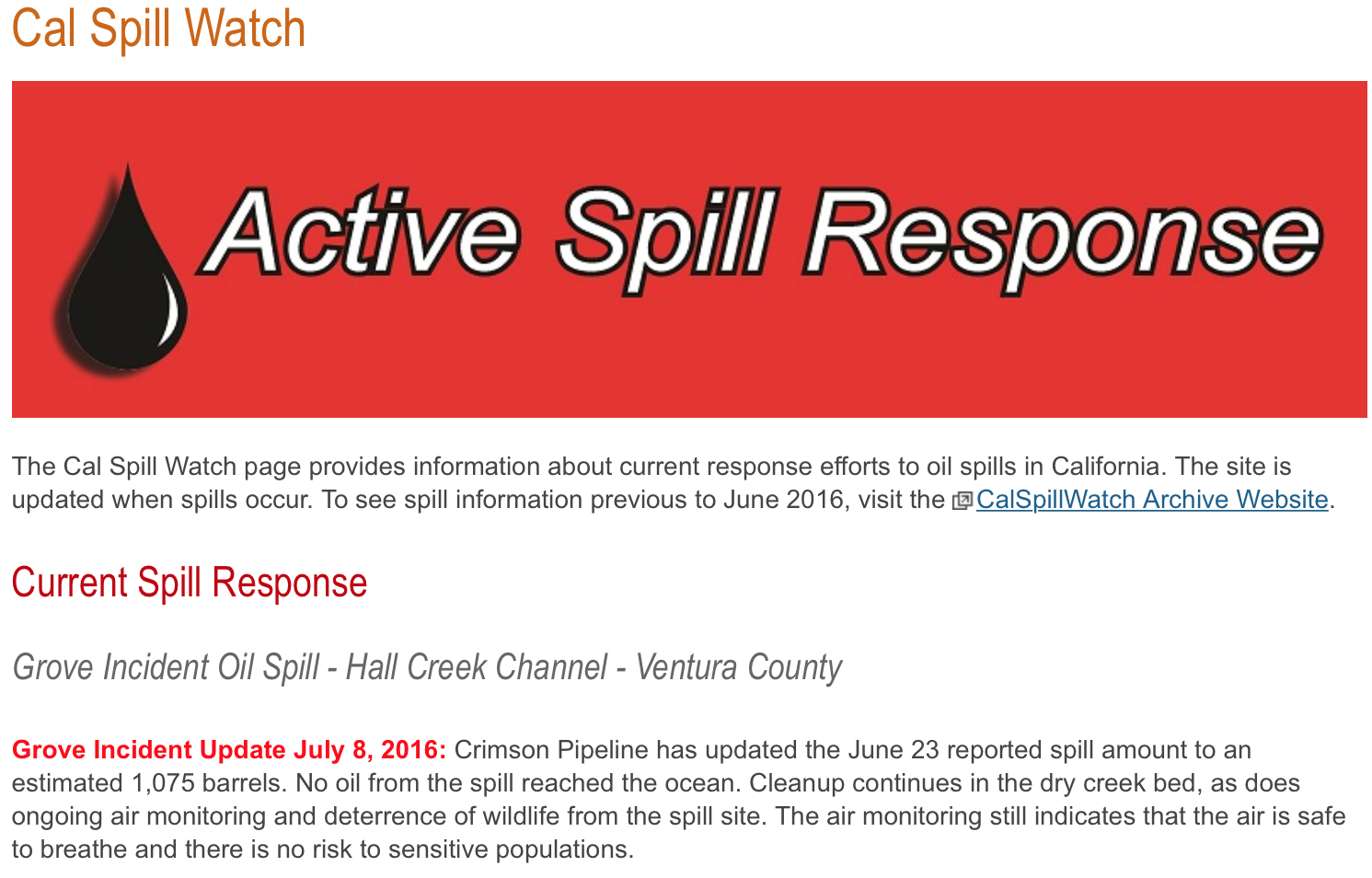
Cal Spill Watch on July 9, 2016.
Usually any such revision to volume released is made quietly and garners scant if any media attention. In the case of the Hall Canyon Spill (also referred to as the Groves Incident), estimates were revised upward and motivated coverage in the Ventura County Star a week ago. On July 8, Cal Spill Watch (the oil spill information page for the state of California’s Office of Office of Spill Prevention and Response) posted an upward revision to 171,000 l (45,000 gal, 1,075 bbls). This updated estimate came from Crimson Pipeline and was apparently revised thanks to the large volume of recovered oil tallied by the clean-up crews. This new estimate is 54% greater than that original estimate (although inline with my own higher end estimate from my visual inspection the morning of the spill), to date still widely reported as the older “almost 29,000 gallons” number.
| source | liters | gallons | barrels |
|---|---|---|---|
| My Iniital Estimate: High (June 23, 2016) | 190,785 | 50,400 | 1,200 |
| My Iniital Estimate: Low (June 23, 2016) | 63,595 | 16,800 | 400 |
| Official Estimate: June 23, 2016 | 111,291 | 29,400 | 700 |
| Official Estimate: July 8, 2016 | 170,911 | 45,150 | 1,075 |
Another depressingly common phenomenon in the wake of oil spills in our modern era is the nagging sense of not being told everything. Residents proximate to the spill feel this, the general public feels this, reporters feel this, scientists feel this, and often agencies or even the responsible party feel this. In short, the structures and procedures we have erected around such events are problematic. They have emerged from our overly litigious approach to dealing with impact assessment. The focus all too often is on assigning blame and seeking (or refuting) fiscal damages rather than on fully informing the general public or scientific community who clamor for answers.
Having been involved in such events for many years, I can tell you everyone I have encountered wants to clean-up and quickly mitigate any and all spill damages, but a huge amount of distrust and so-called recreancy exists between various camps and further adds to the bureaucratic layers. Case in point, the clean-up itself…
Given that the oil spilled was limited to the very bottom of the Prince Barranca, it should have been easy to clean-up. Surface pooled oil was primarily suctioned up over the course of the first two days. As the creek bed was dry before the spill and the contamination was fairly constrained (generally 1-2 meters in width and perhaps 30 cm deep on average) over the course of the not quite three-quarters of a mile stretch of contaminated creek, it should have been easy to proceed to the next step of digging up and carting away all contaminated materials. This would have set-up the subsequent restoration efforts.

Panoramic of channel botton at the end of June 2016.
But one month out somewhere between 100 and 200 hazmat personnel from two different contractors are still engaged in a variety of pre-digging activities, only getting to the actual physical excavation over the past several days. Most surprising to me was the use of aggressive flushing of the creek with large volumes of potable water (up to 40,000 gallons a day) dumped into the gorge. The idea here was to try to remobilize oil retained in various pockets across the length of the barranca.

Spill recovery staging July 14, 2016.

Extensive infrastructure was installed by day two to facilitate clean-up crews accessing the site.

Sandbag dam for first water flushing trials in the Prince Barranca. July 29, 2016.
The decision to flush seems to have at least partly been motivated by concerns over trying to minimize the need to disturb soils that might harbor Native American artifacts. Additional concerns were voiced by agency personnel about the installation of steps down the ivy-covered hillsides of the barranca. We are therefore at best many weeks from cleaning up this site. All the while mobile wildlife are potentially exposed to remnant oil, likely attracted into this once dry, now wet barranca that serves as a wildlife corridor (agency officials are monitoring the area intensely now). We are also risking wider vegetation impacts as this oil sits and saturates into soils along the creek bank. Again, much of this is hard to estimate from outside the incident command given the lack of information coming out about the efforts within the barranca. And so this takes us to our next development…the PR story.
The first big PR “open mouth, insert foot” move of this spill occurred at the Ventura Town Hall just after the spill. A meeting was called on the low down by Crimson Pipeline. In truth this was not directed at nor advertised to the wider public. Rather it was an effort by Crimson to answer questions of residence in the immediate vicinity of the spill and make sure they had access to claims paperwork and points of contact of filing. What ended up taking place however was a PR nightmare for the company. It appears that they only sent representatives who knew about the claims process. Consequently when the audience (including Ventura County Supervisor Steve Bennet) asked questions pertaining to the material aspects of the spill such as expected duration of the clean-up, air quality measurements, pipeline repair progress, etc. the representatives appear to have not been fully briefed as one would have hoped. Amongst other things they failed to mention, the pipeline’s faulty junction/value that was at the epicenter of the spill was already repaired and mere hours away from being recharged with oil and returning to routine operation. I think it is fair to say that was not the best move when one is seeking to calm a nervous audience.
This and similar such opacity when it comes to finding concrete facts about the repair and clean-up have pushed Crimson into something of a defensive position to the point where they have begun turning to Op-Eds and Press releases to get their story out there. This culminated most recently in yesterday’s “dueling” op-eds in the Ventura County Star wherein Supervisor Bennett aired his concerns and Crimson Pipeline President Larry Alexander argued the case for the company in the midst of what he called “misperceptions” in the media and general public.

Amidst all this, I can see how some folks are left confused and wondering what is going on. Indeed, I feel like that most days! For now all we can do is stay tuned and hope for an increased rate of clean-up (and much less potable water being dumped down the drain).
Congratulations to our Computer Science students Daniela Miles and Maria Contreras on being named 2016 GHC Scholars and receiving a GHC Scholarship Grant to attend 2016 Grace Hopper Celebration of Women in Computing conference.
Very proud of you!

The realization of an epidemic of police violence, racial/economic inequality, and deep-seated divisiveness across our country that has been growing for the past year and half exploded last night in Dallas. The soul searching and groping for ways to move forward has been helped along thanks in no small part of technology.
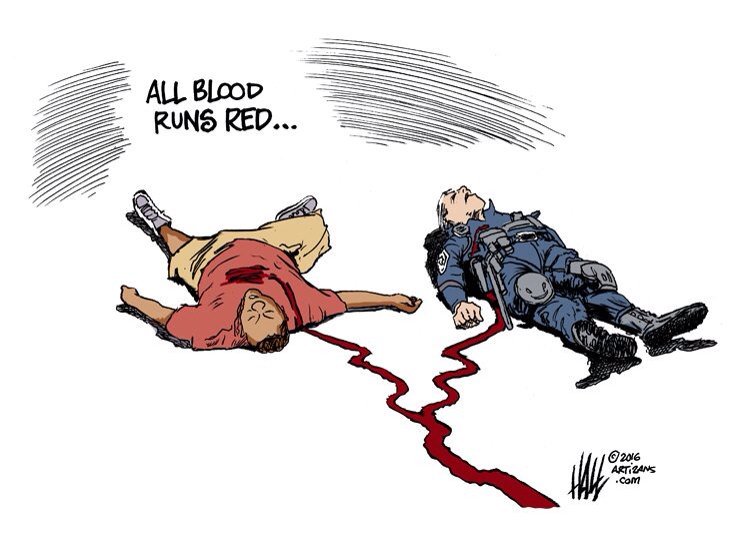
Given the lack of good, nation-wide data on police shootings, we have been forced to turn to media outlets and advocacy groups who have recently begun to establish their own datasets to explore this phenomenon objectively. Arguably the best of these is the Washington Post’s database (their 2015 data is freely accessible on GitHub if you’d like to explore it yourself) which suggests that police officers kill an average of three Americans of all stripes per day and disproportionately kill unarmed black folks. This Washington Post’s tracking of such violence only began in 2014 and as of today only extends back to 2011. And while it covers all police shootings (suspects who pulls out a gun and shoots at officers, bystanders accidentally hit by stray gunfire, etc.), the rate appears to be going up.
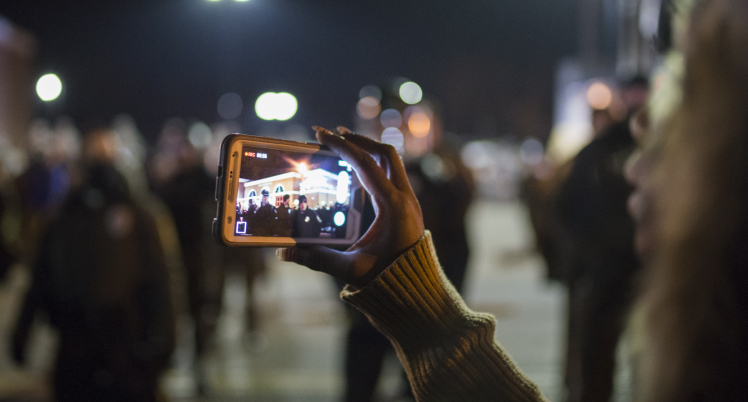
We know that this phenomenon didn’t begin in 2011. The drivers of this violence are legion and rooted in systemic racism and inequality across our country’s historical arc. But the real reason this dialog has come to widespread attention in the past year and half (and especially this past week) is the ubiquity of cheap but powerful technology in the form of cell phones and their associated ability to record events as they unfold.
Access to technology (especially high technology) is increasingly being viewed as a civil right and fundamental to our first amendment rights as Americans. Both individual technologies (e.g. RFID, Bluetooth, 4G cell phone networks, satellite data transmission, fantastically high resolution cameras) and ways of sharing ideas and information (e.g. social media and novel streaming platforms) are common and increasingly user friendly. Our friends in places like Russia and El Salvador harassed by their local law enforcement forces rarely use such tech to hold security forces accountable given the blowback that routinely ensues. But those of us in western democracies do indeed have access to this tech and have increasingly grown comfortable with generating and consuming tech’s media products over the past two decades.
I think most of us see technology as a ratchet. A one-way street that will only tend to get better. This is at best a pipe dream. Indeed, tech companies are busy right now experimenting with ways in which to limit the utility of their creations in certain settings. For example, Apple has recently filed a patent for infrared signal-based disabling of your iPhone’s camera. The idea here is to help stop the dozens of folks surrounding you at that concert from recording that oh-so moving ballad or kickin’ jam. But in the hands of your local law enforcement (like this guy) or phone company (like mine), we can easily see how this or similar such anti-recording tech can be used to block citizens from freely exercising their ability to document events happening to them or their community. Such developments are things we all need to pay attention to.
But the real technological leap “forward” last night wasn’t the ability to record an event or spark interest in it. It was the ominous use of new tech to end it.
While information is still pouring in about the particulars of last nights’ insanity of a sniper attacking police and protestors at a non-violent march (12 people were shot, five officers were killed) in Dallas, it has now become clear how the threat of additional violence ended. After the initial shooting spree, the sniper apparently holed up in a parking garage and threatened to detonate bombs. He stated “the end was coming” and he was hoping “to kill white people, especially white officers” according to Dallas Police Chief David Brown. Understandably feeling they needed to end the standoff quickly, Dallas Police strapped their own explosive onto an articulated arm of one of their robots typically used to detect and dispose of bombs. They then drove it up to the hiding sniper and killed him with a controlled detonation of that explosive.
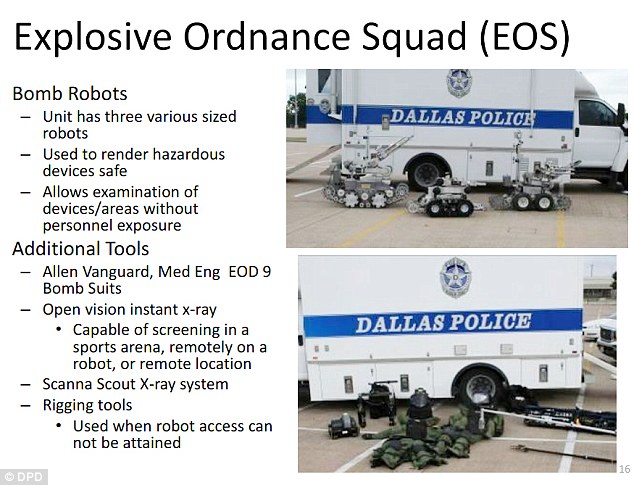
As far as I can tell, this appears to be the first use of a robot to intentionally kill someone in the U.S., certainly by a police force. Peter Singer told Gizmodo the only thing that could vaguely be considered in the same category was an “accidental case in [Tennessee], where [a] tear gas canister shot during a standoff accidentally started a fire that burned down a mobile home.” The consequence of this use is clear: remotely piloted systems are now part of the mix when in comes to the array of deadly force options considered by law enforcement.
 To be sure, police forces will not go out and start blowing up suspects tomorrow. Indeed during last summer’s Robotics Challenge Workshop we attended after the DARPA Robotics Challenge Finals in Pasadena, former fire chief and current Deputy Under Secretary for Science and Technology at the U.S. Department of Homeland Security Robert Griffin pleaded with our audience of roboticists to please focus on reliability of the platforms we were creating. He noted that “you need to keep it real simple for us…that fireman or that officer doesn’t have a Ph.D. in electrical engineering” and that the biggest hurdle we need to solve before robots play a larger role in first responder settings is simple reliability. “Until a fireman can grab one of these suckers, drive it up to the house is question, and have it work almost 100% of the time, we can’t really use it” he added. Indeed, our Ventura County Sheriffs Department has an array of ground-based and aerial robotic technology, but rarely brings those technologies to bare on day-to-day problems both for reliability and for public perception concerns. This is the case even though our County Board of Supervisors approved the use of such technologies prior to the department ever seeking to acquire them AND the fact that more than 94% of Ventura County residents and people across the U.S. strongly support the use of robotic technology by such first responders (see our soon-to-be-released national polling results next week). But apparently we don’t need a sophisticated unit to kill folks. An RC car and a roll of duct tape is essentially all you need if you have access to a explosive.
And as I have seen for the past 20 years with mountain lion management here in California, when confronted with a stressful, novel crisis situation, law enforcement officers often rely on Googling news reports for how the last law enforcement agency responded to such a crisis and often simply emulate that previous approach. Hence, I think it is likely that robots will increasingly be seen as a means to project lethal force in crisis situations across our country (and I’m not the only one to think so). Add to this mix our breaking wave of increasingly powerful and available small Unmanned Aerial Systems (sUAS) and we have likely crossed the Rubicon last night in Dallas.
Ultimately the technologies to document events and usher in their conclusion are in our hands. Rarely do things go well when we let the purveyors of these technologies do whatever they want unscrutinized or unmoderated. Now is the time for not just a wider discussion of police practices and social justice. It is also the time for continuing the discussion of the importance of technology and what we as a society consider the appropriate or acceptable uses of various technologies. These discussions are no longer (if they ever were) separable.
Carl Sagan said it so well in 1997’s Demon-Haunted World:
We have arranged a global civilization in which most crucial elements…profoundly depend on science and technology. We have also arranged things so that almost no one understands science and technology. This is a recipe for disaster…human misery is more often caused not so much by stupidity as by ignorance…
Confronting and growing beyond violence need not be tied to technology, but in the world we have grown for ourselves, it is hard to see how to separate the two.
Here is to all those who feel the boot heel of injustice and those who try to do the right thing day by day.
This is the digital hub for my work at CI. Feel free to explore! – Dr. A

 Scroll to top


