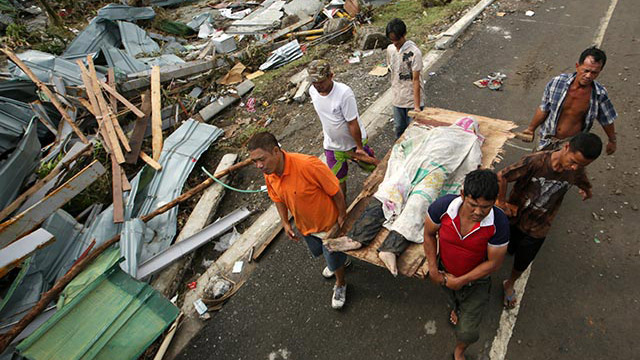
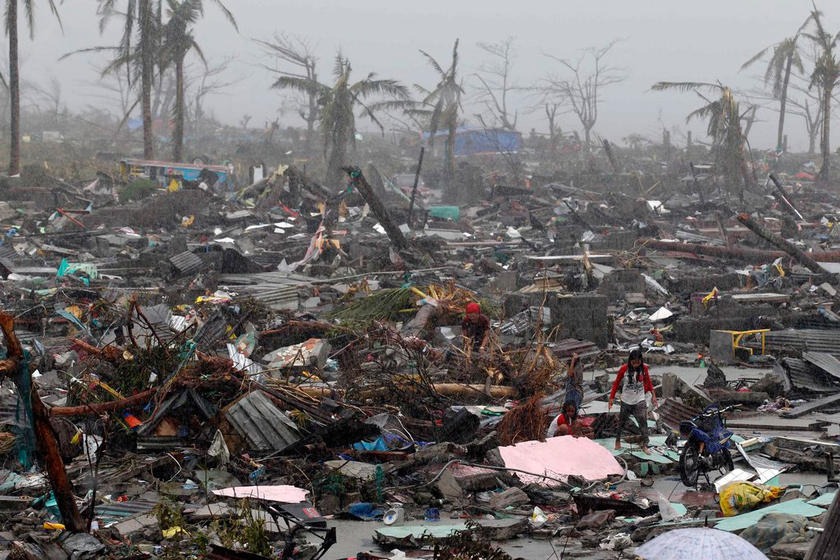
 On November 8, 2013, Typhoon Yolanda swept the Philippines and is still considered the most powerful storm recorded in history. The devastating outcomes of this storm left the country with millions of dollars worth of damage. Although the storm lasted only one day, its winds, reaching speeds of greater than 250 km/hr, ravaged several cities in Central Philippines(WHO, 2013). As a result, there were 6201 deaths, 4.1 million people were displaced, 1.1 million homes damaged and 16 million people were affected (USAID, 2014). Government preparations began three days prior to the storm’s arrival and included preparing and allocating food and relief items, evacuation, and healthcare and rescue personnel deployment (GovPh, 2014). Despite these preparations, the aftermath proved the country to be ill-prepared for a storm of this magnitude. Both government aid, the World Health Organization (WHO) and the United Nations Disaster Assessment and Coordination (UNDAC) responded in an effort to provide much needed supplies and aid to the country (WHO, 2013). Emergency kits were provided to cover basic health needs of 120,000 people and 400 surgical interventions. Additionally, international support came in form of medical teams and hospitals to provide emergent care to the country’s wounded (WHO, 2013).
In addition to destroying homes and uprooting trees and telecommunication equipment, the storm destroyed all hospitals. Road blockages and lack in emergency relief stations and shelters posed a significant barrier in the response to the disaster. Both air ports and sea ports were closed, which further contributed to a lack of access to care and responders. On November 22, 2013, 14 days after the storm hit, one million food packs and more than two hundred thousand liters of clean water were distributed to the areas affected (GovPh, 2014). By this date, almost one thousand aid centers were established. The Philippines continues to see the effects of the catastrophic storm a year later as they finally transition out of the emergent humanitarian relief phase to the rehabilitation stage (USAID, 2014). Although the country anticipates and prepares for an expected amount of storms each year, it was clear that this catastrophic event required a significant amount of preparation. Humanitarian funding totaling $87,735,775 as of February 18, 2014 was reported to help significantly in the country’s initial emergent phase (USAID, 2014). The country’s low socioeconomic status certainly affected the initial access to resources and continues to be an issue plaguing citizens today. As mentioned in the USAID report (2014), the country’s economy depends heavily on the production of coconuts, thus affecting the livelihood of more than one million coconut farmers after the storm destroyed 33 million coconut trees. Lingering public health concerns associated with the storm include the shortage of dengue fever prevention and treatment, immunizations, mental health and psychosocial support (USAID, 2014).
As I imagine myself as a healthcare provider, I can see the hopelessness one might feel amidst such a catastrophic event. I can only imagine the desperation and overwhelming feeling as one of the only healthcare providers with thousands of severely injured people to help. Knowing you can only do very little with the limited resources and without a rescue shipment in sight would only deepen the desperation one might feel in the wake of such a calamity. Days seem like years in these instances, and although aid finally arrived, it proved to be too late for so many. The Philippines has since focused on disaster preparedness by establishing projects making the Eastern Visayas less vulnerable to typhoons and preparing with sufficient food, medical kits and generators. In May of 2014, government agencies and private organizations launched an application that provides satellite images and high resolution hazard maps to be used in rehabilitation efforts in the Philippines (GovPh, 2014). Although the Philippines has made great strides in rehabilitating since the storm, it still is unprepared to face another of such a magnitude as it is still working toward re-establishing to its baseline function. I think it’s important to consider however, that as healthcare providers we must be prepared for possibility of such an event occurring in our own state or country.
References:
USAID. (2014). Fact Sheet #21, Fiscal year 2014. Retrieved from http://www.usaid.gov/sites/default/files/documents/1866/philippines_ty_fs21_02-18-2014.pdf
WHO. (2013). WHO responding to health needs caused by Typhoon Haiyan (“Yolanda”). Retrieved from http://www.who.int/mediacentre/news/releases/2013/typhoon-haiyan/en/
GovPh. (2014). Typhoon yolanda a year later. Retrieved from http://www.gov.ph/crisis-response/updates-typhoon-yolanda/