This week has consisted of writing my introduction for my paper. Lots of studies are being read to help with information related to terrain analysis and vegetation mapping. Five other finals and work have me competing for time so this week has been a struggle.
Guy Trimby (Plymouth Marine Laboratory) in collaboration with Paul Spaur, and the rest of the AARR team, set to prove that OpenROVs can be used as tools to detect fluorescence in the marine environment, and used the Cook Islands as a test bed for this experiment.Guy developed an UV LED light package, which excites proteins in organisms, causing them to emit a different wavelength of light (fluoresce), often times giving off brilliant colors.
LED payload
A specially filtered Go Pro camera filters and records the light for analysis. Paul and the AARR team outfitted their ROVs with a special payload setup to carry the system, and modified their main LED lights with filters to make them emit only blue/UV light, and filtered the main ROV camera.
Modified main ROV lights to emit blue light.ROV payload system.
The fluorescence is used in many species as warning signs, in communication, and in protection from the sun. The system has a lot of important implications such as: detecting new organisms and proteins that fluoresce, using said proteins as biochemical markers for use in medical research, and for use in gauging the health of corals and other organisms.
We set up several sites in a coral reef, and recorded day and night surveys of each. At night, it was difficult to see, so we marked each area with glow sticks prior to sunset, and navigated the ROVs out to each one. We were able to see each coral that fluoresced both in day and night for identification, and we even discovered a species of clam, the Small Giant Clam (Tridacna maxima) that was not previously known to fluoresce!
In order to really verify that what I am seeing on the radar is a bird, I am going to need to verify it with sightings on the ground. Peak migration happens at night (and in the spring and fall) so this will take time and a thermal imaging camera. I have several ideas from an iPhone add on to a $50,000 thermal camera that dreams are made of, to many cameras in between. This will be my next step and I will need to have it ready to go for spring migration.
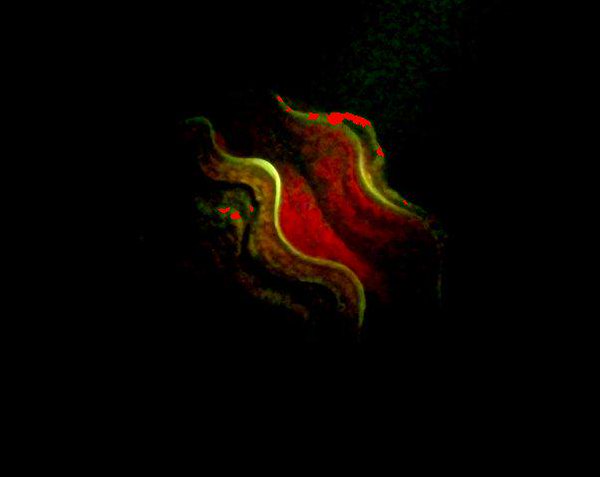
I have gotten through the tough wind problem I was faced with and have created a formula which can be used in the algorithm to shift directionality of movement based on wind. I am using a color scheme that picks out targets that are within the right speed, this is radial velocity.
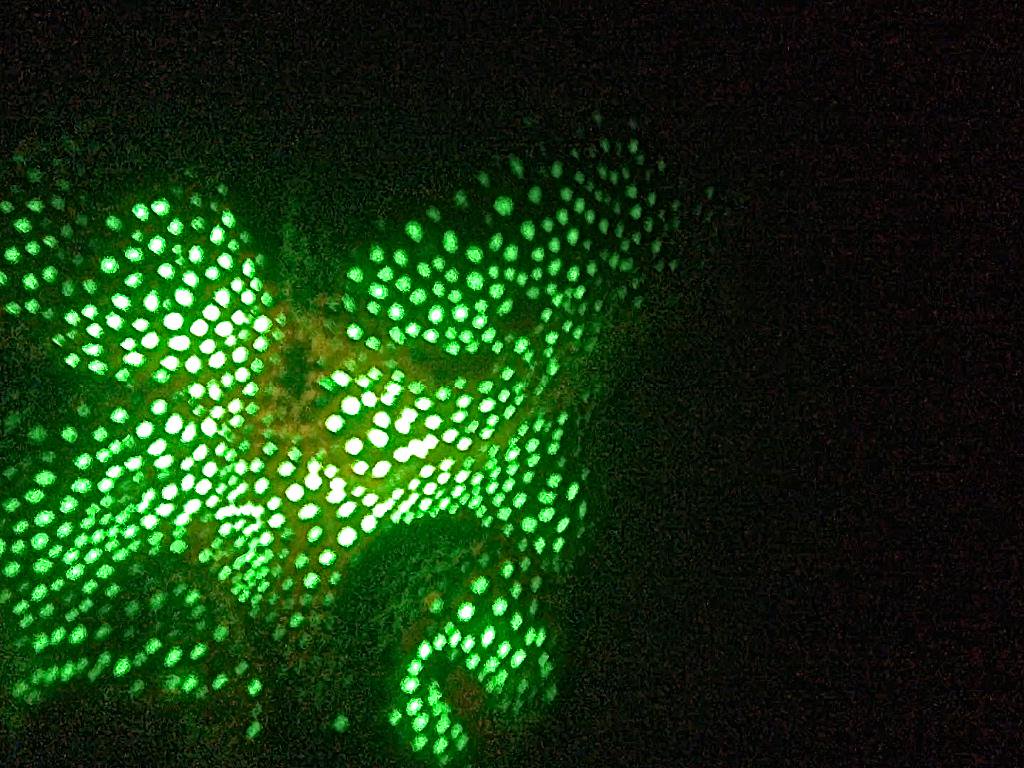
and I have used a grid to show targets that echo back the right dBZ level (5-15 dBZ)
And ran the first test at 0 knots and 0 degrees (these are all of the matching targets aka birds)
This can be adjusted for wind speed and direction, shown here at 45 knots and 45 degrees.
I am still looking for the best wind data available. This will be an evolving process with new layers of detail added as more information is gathered.
https://cikeys.com/wp-content/uploads/2026/09/ci-logo-ciKeys.png00Sean Andersonhttps://cikeys.com/wp-content/uploads/2026/09/ci-logo-ciKeys.pngSean Anderson2015-12-09 06:32:202015-12-09 06:32:20Filtering Out The Clutter