Hello world!
Welcome to WordPress. This is your first post. Edit or delete it, then start blogging!

Welcome to WordPress. This is your first post. Edit or delete it, then start blogging!
 **This is an example of how one can contextualize a primary source document using “soft research” skills. It is not authorized for reuse by anyone, under any condition, except with the expressed consent of Sean Kelly, Professor of Political Science, California State University Channel Islands.***
On November 6, 1973 Charles Withuhn of Chico, California, wrote to Harold T. “Bizz” Johnson to express his opinion about the potential impeachment of then-President Richard Nixon. Earlier in 1973 evidence began to mount that President Nixon was involved in a plan aimed at collecting information on his political enemies. The conspiracy and the aftermath that followed is known as Watergate.
In Mr. Withuhn’s opinion, the time had come to remove the president from office using Congress’s power of impeachment. Section 4 of the Constitution provides that “The President, Vice President and all civil Officers of the United States, shall be removed from Office on Impeachment for, and Conviction of, Treason, Bribery, or other High crimes and Misdemeanors.” Article 1, Section 2 provides the House with the power to impeach the president—that is, to promulgate a bill of particular justifications for removal of the president—which is approved by a simple majority in the House. The Senate can remove the president with a two-thirds majority of Senators (Article 1, Section 3).
Mr. Withuhn argues that the Congress, up to this point, has not exercised its full constitutional powers. “Congress has not realized its power in my lifetime.” In his view “…Congress has the responsibility to limit the President or history must indite [sic] Congress as an excessory [sic] to a desperate man.” He seems to be arguing that if Congress fails to remove the president they are culpable for Nixon’s illegal actions.
One wonders what might have motivated Mr. Withuhn to send a letter to Bizz Johnson. Three weeks prior to this letter it was discovered that Nixon recorded all conversations and telephone calls in the Oval Office. These tapes were powerful evidence and Nixon refused to turn them over. About two weeks prior to this letter, Richard Nixon fired Archibald Cox, a special prosecutor who was assigned to investigate the events surrounding Watergate. This became known as the “Saturday Night Massacre” as several of Nixon’s aids refused to carry out the order to fire Cox and were fired themsleves. Robert Bork, who would later be nominated to the Supreme Court—a nomination defeated in the Senate—was the White House aid who ultimately carried out Nixon’s order.
While the writer does not mention these events, it is likely that these events are reflected in his general feeling that the presidency requires “complete honesty and openness without which there can be no public confidence.” Withuhn does suggest that Bizz, as a member of Congress, has a responsibility to reflect the wishes of his constituents. “As a registered voter of Chico, I ask you to speak up now, loud enough for all to hear, that at least some of the people you represent demand the impeachment of the President now.”
Formal articles of impeachment were never brought forward against President Nixon. As the House moved toward approving articles of impeachment in August 1974, President Nixon resigned. This document is a reflection of the strong feelings that many Americans had about the events surrounding Watergate. Never in our history has a president been removed from office by Congress. But at the time, Mr. Withuhn was willing to push Bizz Johnson toward that action. In his words, the removal of Nixon was “the only remaining way to restore pride in our government…”




It’s been quite awhile since I’ve read an article that has inspired me to write a post on a Sunday afternoon. But today, I saw a link to an article in my Nuzzel feed titled “Is the lecture unfair?” and it piqued my interest. This recent article from the New York Times discusses findings from recent studies that show how lectures privilege students who come from privileged backgrounds. The author, Annie Murphy Paul, explains,
“…a growing body of evidence suggests that the lecture is not generic or neutral, but a specific cultural form that favors some people while discriminating against others, including women, minorities and low-income and first-generation college students. This is not a matter of instructor bias; it is the lecture format itself — when used on its own without other instructional supports — that offers unfair advantages to an already privileged population.”
The idea that lectures create a biased learning environment that privileges certain students is not surprising to me — and it may not be surprising to you either. If you are familiar with my work, you’ve likely read other posts where I examine this notion. However, to see studies that excavate the lecture as a method of teaching that reinforces social inequities is worthy of discussion. The article reminded me of a video presentation I made back in 2011 titled “Expanding the Funnel,” which connected the flipped classroom model (a form of active learning) as a strategy for increasing degree attainment rates in community colleges (which saw an enrollment explosion in 2010-11, the time of the U.S. economic downturn).
Community colleges have an open access policy, which means everyone one is welcome. They are the gateway to higher education in the United States and, as such, community college students are the most diverse group of learners in higher education. It is not uncommon for a single community college class to include students from multiple generations, ethnic minorities, first generation college students, ESL learners, students with cognitive differences (dyslexia, dysgraphia, etc.), and students with physical disabilities. This diversity creates a powerful, fertile soil for students to learn from each others’ experiences. However, not all instructors use active-learning strategies in their classes and, as such, the learning environments that students confront while in college are not as inclusive as the open-access mission of CCs. Often, when I’ve discussed this topic with my peers, I’ve heard professors note that active learning does students who wish to transfer to a 4-year a “disservice,” because it doesn’t provide them with the skills needed to excel in the lecture environment.
Let’s keep this conversation going. It’s time to start examining the broader, social implications of pedagogy on degree attainment in higher education. All students are capable of learning and obtaining a college degree. Let’s support all of them.
Finally, we must not cast blame on faculty. We need to support faculty to understand how the way they teach a class impacts the percentage of students who experience deep learning. Active learning is one step towards a more inclusive classroom.
This week in my Digital Citizenship class we are discussing social issues and why they should be considered to be of importance to college students. I personally had little interest in political issues until my senior year of high school when the 2008 Presidential candidates commanded attention in my Government class. Five issues that stand out to me in particular are racism, LGBT rights, the increasing cost of education, abortion, and rape culture.
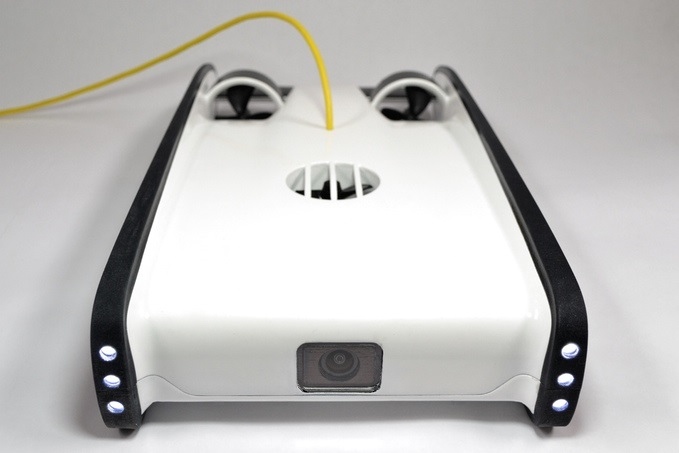
Our friends up at OpenROV have (almost) formally opened up their new Kickstarter project to fund their next generation ROV named Trident. This was the unit vetted this summer up in Lake Tahoe (see the pic below) while we were dealing with our Oil Spill down here in SoCal.

By all accounts this unit is much more maneuverable and solves several of the mechanical issues we have dealt with in the current iteration/design. OpenROV has opened up their Kickstarter page, but not formally launched. The first few folks who sign up for one will be able to get one for half off…except we are about a year out from delivery.
No word on when their Kickstarter campaign will formally go to “on” but I suspect it will be coming up soon.
Check out our other posts (e.g. here or here or here) on our blog where we have very successfully used existing OpenROV models or their regular OpenROV page to find out more about this great open-source robotics company.
For those that don’t know that when I am not buried three feet deep in textbooks and notes, shoving large amounts of information into my sometimes very tired brain, I am a Bartender full-time and have been for many years. With the nature of the job, different topics come up from time to time that we discuss throughout any given shift. Many of the Reg’s(Frequent customers) know that I am back in school and often ask questions pertaining current events, “how is it going? How do you like it? When is the graduation party”? Just the other day the question rang out again, “what is it like being so much older than most of the people there?” Most of the time the answer is with a shrug of the shoulders, “it is just fine I guess”.
For some reason or another that question has resonated in the front of my mind for the past few days, and I have given it some thought. Most of my fellow student have been very kind to me, and often enough I befriend lab partners, people from study groups or that I sit next to in class. The social experience that I have witnessed has been very pleasant and quite helpful. I know that with being a bit older the social pressures and issues that I receive will be much different than my fellow students. I don’t suppose that I will have to worry about peer pressure, racism, being bullied (either cyber or in person), or the concerns with drugs and alcohol like my fellow student might. It may be for one reason or another, but I don’t give any of those issues much thought when it comes to affecting me or my direct surroundings. I can’t remember the last time I had to endure such problems.
I do feel the pressure of being accepted in the social aspect of social status and peer acceptance. I think all humans feel this when introduced to new environments either physical or psychological. I will always remember that first day back to class. I walked into the classroom, and all of the students looked up at me, sat up in their chairs and started putting away their phones, grabbing for notebooks and sorts. I chuckled and found my seat in the front row and had a quick laugh. I remember hearing one of the girls say, “I thought he was our professor”. I knew then that I was going to like my return to school and to make the most of it.
There are many social issues that we all have to deal with either as a student or just as a human being. Sexuality, gender identification, social media, economics, and all that I have mentioned earlier. If we take the wisdom of, “always being true to ourselves and others; knowing that who you are is not only good enough but downright fantastic”, then many of these social issues have no leverage and not need to be a concern for you or anyone else. As far as the rest, remember that you are not alone and there is always someone to talk to about it.
As I always say, remember to smile, make someone laugh out loud, and have a fantastic day.
CDR
After reading the articles assigned this week I have to admit I was very shocked with some of the facts mentioned in the articles. the one that specifically stood out to me was Children as consumers. I mean I was aware of how much time children and adults spend watching TV and other electronic devices but I never thought it was this bad. Spending more time watching television 15,000 to 18,000 hours of television than 12,000 hours spent per year in school is scary. What is ever scarier to me is the amount of children that watch thousands of advertisement commercials targeting them and some of the children aren’t able to comprehend the messages behind the advertisement and as a result believe the whole commercial. This is when the big problem begins, not only for children but also adults leading to obesity and body issues . The article also mentions how children and teens influence parental purchases totaling over $130-670 billion a year. That explains why media’s main target is children. Several solutions in Europe regarding media regulation were brought up as a way to improve children’s overall health and stability by banning many of the advertisements, but my question is if this will even work or make things better? What is the U.S. doing in regards to this issue? What do you guys think?
 Scroll to top
